고정 헤더 영역

상세 컨텐츠
본문
반응형
[26.06.18] Songdo Human Leg Found Case: The Mystery of a Confession from a Nursing Hospital with No Operating Room
The nation has been left reeling after a human leg, wrapped in blood-stained bandages, was discovered at a recycling facility in Songdo, Incheon. Following a rigorous police investigation tracking waste disposal routes, a nearby nursing hospital stepped forward to confess, claiming they accidentally discarded it. However, shocking revelations show that this hospital entirely lacks an operating room required for major surgeries. Law enforcement agencies are now moving toward a forced investigation on charges of illegal medical practices (Violation of the Medical Service Act) and illegal dumping of medical waste (Violation of the Wastes Control Act).

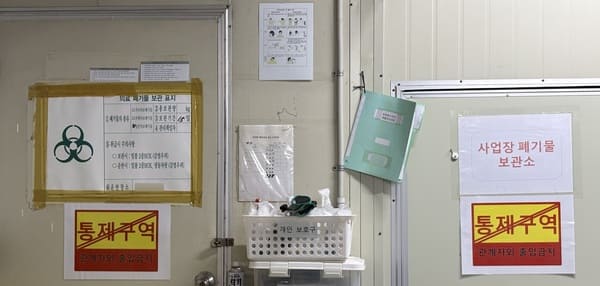
📌 Key Details of the Songdo Human Leg and Hospital Confession Case
| Category | Key Summary Details | Legal Violations & Risks |
|---|---|---|
| Discovered Tissue | A 41cm human leg (below the knee) found at a Songdo recycling plant. | Fears of a violent crime were ruled out after a National Forensic Service (NFS) DNA match. |
| Medical Act | Major amputation carried out in a general ward or treatment room at a hospital with no operating room. | Criminal punishment for unauthorized surgeries and illegal medical practices. |
| Waste Act | Human remains classified as hazardous medical waste were illegally thrown into a general recycling bag. | Up to 7 years in prison or a fine of up to 70 million KRW. |
1. Eerie Discovery of a '41cm Human Leg' at a Songdo Recycling Facility Followed by a Sudden Confession
The case unfolded at the Southern Regional Wide-area Materials Recovery Center in Songdo-dong, Yeonsu-gu, Incheon. A sanitation worker sorting through recyclable items discovered a severed human leg—spanning 41 cm from below the knee down to the heel—wrapped in thick layers of bloody bandages. The police were notified immediately.
Incheon police formed a dedicated violent crime unit and tracked garbage truck collection routes. Under heavy investigative pressure, Hospital A, a local nursing hospital in Jung-gu, Incheon, confessed eight days later on June 18, stating, "We accidentally misclassified the surgical tissue and threw it out with regular recycling."
2. National Forensic Service (NFS) DNA Test Results: "Identified as an 80-year-old Inpatient"
Following the confession, authorities identified Ms. B, an 80-year-old female patient residing at Hospital A, as the source of the tissue and ordered an expedited DNA test through the National Forensic Service (NFS).
- NFS Forensic Report: The DNA from the discovered human leg precisely matches the inpatient, Ms. B.
- Guardian Awareness: The patient's family members were reportedly already aware that her leg had been amputated due to severe diabetic complications.
While the DNA match successfully ruled out gruesome homicide or hidden body scenarios, the focus has shifted entirely to the severely illegal administrative and medical procedures conducted within the nursing hospital.
3. [Suspicion ①] How Was a Major Amputation Conducted in a Hospital with No Operating Room?
Surgical experts are raising massive red flags regarding how a lower-limb amputation could be executed inside a nursing facility that lacks a licensed surgical environment.
💡 Statements from Major Hospital Surgical Specialists "Even if an elderly patient suffers from severe tissue necrosis due to diabetes, standard medical protocol mandates transferring the patient to a higher-level general hospital equipped with professional anesthesia units and sterile environments. Amputating a limb in a facility with no operating room completely defies medical standards."
Data from the Health Insurance Review and Assessment Service confirmed that while Hospital A employs general surgeons, not a single formal operating room is registered on site. Conducting an invasive amputation in a normal hospital ward or a minor treatment room constitutes a severe case of unauthorized medical treatment and a direct violation of the Medical Service Act.
[Police Focus Points on Medical Service Act Violations]
- Locating the exact area inside the facility where the illegal medical practice occurred.
- Investigating whether appropriate anesthesia and critical life-support measures were maintained.
- Probing why the leg was wrapped in suspiciously clean, new bandages right before being discarded.
4. [Suspicion ②] Human Flesh in a Recycling Bag? Severe Medical Waste Management Violations
Hospital A claimed that a staff member committed an administrative blunder by tossing the limb into a general recycling bag instead of a dedicated biohazard bin. However, under South Korean law, this remains subject to severe criminal penalties.
- General Medical Waste: Consumables like contaminated gauze, syringes, and bandages.
- Hazardous Medical Waste (Tissue/Organs): Actual human body parts or organs. These must be locked in yellow, sealed sterilization containers and incinerated by specialized bio-waste handlers.
Investigations indicate that the hospital completely lacked the proper infrastructure required to process actual human tissue waste. Violating the Wastes Control Act by dumping hazardous medical waste carries a penalty of up to 7 years in prison or a fine of up to 70 million KRW.
5. Future Outlook and Forced Investigation into the Songdo Incident
Representatives from Hospital A have declined to offer detailed explanations, stating, "We have cooperated fully with the police, but because the case is ongoing, we cannot issue further statements."
Incheon law enforcement plans to summon the hospital director and chief medical officers as soon as the final written autopsy reports are handed over from the NFS. The investigation will intensively focus on **▲ the exact location of the surgery, ▲ the legality of the amputation, and ▲ the intentionality behind the medical waste dumping**. Prosecutors are currently preparing search and seizure warrants to secure hospital logs.
One-sentence Summary: A 41cm human leg found at a recycling center in Songdo, Incheon, was confirmed to be hazardous medical waste illegally dumped by a nursing hospital lacking an operating room. Based on the NFS DNA match, police are heavily investigating charges of illegal amputation surgery (Violation of the Medical Service Act) and illegal waste dumping (Violation of the Wastes Control Act).
728x90
반응형
그리드형(광고전용)
댓글 영역