고정 헤더 영역

상세 컨텐츠
본문 제목
25.09.25.Today News : Mastermind of ₩76 Billion Suwon Rental Fraud Sentenced to 15 Years… Victim Compensation Still Lacking
본문
반응형
Mastermind of ₩76 Billion Suwon Rental Fraud Sentenced to 15 Years… Victim Compensation Still Lacking
📍Family defrauded 546 tenants through gap investment scheme; court imposes maximum sentence but restitution remains minimal
A family that orchestrated one of the largest rental fraud schemes in Korea, worth over ₩760 billion, has received heavy sentences. While the mastermind was given the maximum penalty of 15 years in prison, victim compensation remains almost nonexistent, leaving hundreds of tenants in financial despair.

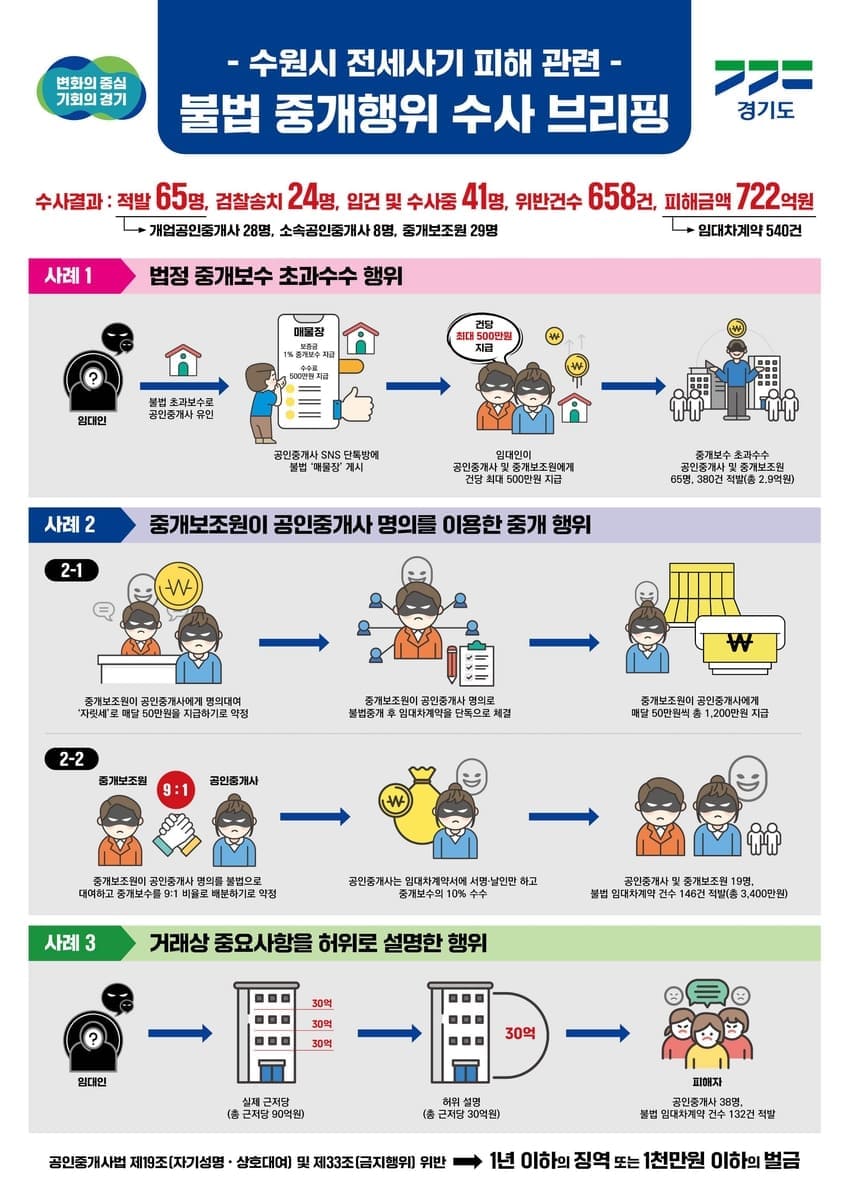
■ Supreme Court Upholds Maximum Sentence
On the 25th, the Supreme Court’s Second Division upheld the lower court’s ruling against A, a real estate operator charged with large-scale rental fraud, sentencing him to 15 years in prison and ordering a forfeiture of ₩103.6 million. This marks the statutory maximum penalty applicable under aggravated fraud charges.
His wife B received six years in prison, while their son C, a licensed appraiser who aided the scheme, was sentenced to four years. The family had purchased and operated 788 housing units across Suwon, Hwaseong, and Yangpyeong through “gap investment” strategies, relying entirely on bank loans and tenant deposits.
■ Elaborate Fraud Tactics and Concealment
The family’s business model was unsustainable from the start, with no viable plan to return rental deposits. They deceived tenants by instructing real estate agents to misrepresent partial joint collateral as full-building collateral, thereby concealing risks.
C, who held an appraiser’s license, inflated building valuations to enable insurance coverage and managed contract renewals and deposit-related procedures, further embedding himself in the fraudulent operation.
■ Courts Deliver Strong Condemnation
In the first trial, the court condemned A for “recklessly spending tenants’ deposits, including over ₩13 billion on online game items, while treating deposits that represent entire life savings for ordinary citizens as disposable capital.”
It was also revealed that one tenant had taken their own life due to the mental distress caused by the fraud. The second trial and the Supreme Court affirmed the ruling, citing the enormous scale of damages and complete absence of restitution.
■ Scale of Damages and Lack of Restitution
A total of 546 victims lost about ₩760 billion in deposits due to this scheme. However, recovery of funds has been virtually nonexistent.
Investigations showed that a large portion of deposits was funneled into failed investments, including land purchases, solar energy ventures, and franchise businesses. Substantial amounts were also squandered on cash advances and gaming expenditures. To date, only a negligible fraction of the losses has been returned, with partial relief provided through government-backed insurance, though full recovery is unlikely in the near future.
■ Social Impact and Calls for Reform
The “Suwon Family Rental Fraud” has highlighted systemic loopholes in Korea’s housing and financial system. Weak oversight on landlords’ repayment capacity and vulnerabilities in appraisal and collateral practices were exploited to facilitate the crime.
Experts stress that “this is not merely an isolated crime but a systemic failure,” urging stronger safeguards, stricter verification of landlords’ repayment capabilities, and expanded protections for tenants to prevent similar cases.
One-line summary : The mastermind of the Suwon family rental fraud was sentenced to 15 years, but restitution of the ₩76 billion in damages remains largely unrealized.
728x90
반응형
그리드형(광고전용)
댓글 영역