고정 헤더 영역

상세 컨텐츠
본문
반응형
“National Actor” Ahn Sung-ki Passes Away… A Giant Who Led Korean Cinema for 69 Years Exits the Stage
📍Dies at 74 After Battle With Blood Cancer, From Child Actor to Veteran Who Left a Mark on Korean Film History
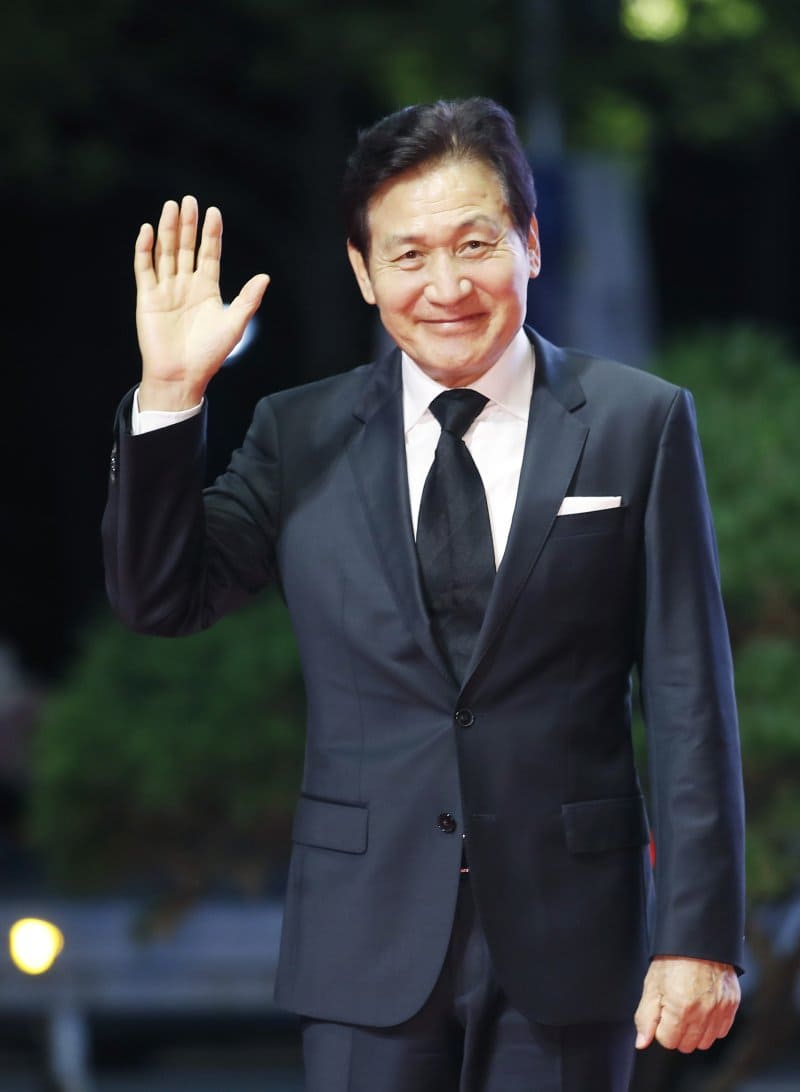
Actor Ahn Sung-ki, widely known as the “national actor” and a representative figure of Korean cinema, passed away on the 5th. From his debut as a child actor to his years as a veteran performer, he remained on screen for 69 years and earned deep respect from the public through his outstanding acting skills and dignified career.

🔹 Eternal Rest After Battle With Blood Cancer
According to the funeral committee of the late actor Ahn Sung-ki, he passed away around 9 a.m. on the 5th while receiving treatment in the intensive care unit at Soonchunhyang University Hospital in Yongsan, Seoul, with his family by his side. He was 74 years old.
On the 30th of last month, Ahn was found collapsed at his home after food became lodged in his throat and was rushed to the hospital. He remained unconscious and received treatment in the intensive care unit thereafter.
Ahn Sung-ki was diagnosed with blood cancer in 2019 and began treatment. He was declared cancer-free in 2020, but the disease was later found to have recurred during follow-up examinations. In October of the same year, news of his hospitalization sparked concerns over his health, and in a 2022 media interview, he personally revealed that he was battling blood cancer.
🔹 A Final Promise: “I Will Return With a New Film”
Even during his illness, Ahn Sung-ki did not give up his determination to return to acting. In a 2023 interview with Yonhap News, he said, “My health has improved greatly,” adding, “I will come back with a new film.”
That same year, he attended the opening ceremony of the 27th Bucheon International Fantastic Film Festival alongside Park Joong-hoon and Choi Min-sik, receiving enthusiastic applause from the audience.
🔹 A Film Career That Began in Childhood
Ahn Sung-ki entered the film industry at the age of five in 1957, appearing as a child actor in director Kim Ki-young’s film Twilight Train. His debut was made possible through the connection between his father, film producer Ahn Hwa-young, and director Kim.
In 1959, he gained early recognition for his acting after The Rebellion of Teenagers, in which he appeared, received a special award at the San Francisco International Film Festival. He went on to appear in more than 70 films over a decade before focusing on his studies upon entering Dongsung High School.
🔹 A Comeback as an Adult Actor After a 10-Year Hiatus
After graduating from high school, Ahn entered the Department of Vietnamese at Hankuk University of Foreign Studies. He completed his military service through the ROTC program and prepared for employment overseas, but his plans fell through due to the aftermath of the Vietnam War. This ultimately led him back to the film industry.
His first work after returning as an adult actor was director Kim Ki’s Soldiers and Young Ladies (1977). He later firmly established himself as a leading actor through director Lee Jang-ho’s A Good Windy Day (1980).
🔹 The Face of Korean Cinema in the 1980s and 1990s
In the 1980s, Ahn Sung-ki rose to prominence as a symbolic actor of Korean cinema through films such as Mandala (1981), People of Kkobaekdong (1982), Whale Hunting (1984), and Chilsu and Mansu (1988).
In the 1990s, he enjoyed his peak years by crossing genres in works including South Korean Partisans (1990), The White Badge (1992), Two Cops (1993), Taebaek Mountains (1994), and Nowhere to Hide (1999).
🔹 The Dignity of a Veteran Actor
Even after the 2000s, Ahn continued to demonstrate his presence in films such as Musa: The Warrior (2001), Silmido (2003), and Radio Star (2006). Although his roles gradually became smaller, he delivered profound performances in Unbowed (2012) and The Face Reader (Hwajang, 2015).
His final film was director Kim Han-min’s Noryang: Deadly Sea (2023), in which he played Eo Yeong-dam, a figure who assisted Admiral Yi Sun-sin during the Imjin War.
🔹 A Living History of Korean Cinema
Over 69 years, Ahn Sung-ki appeared in more than 170 works, leading the flow of Korean cinema. In 2017, a special exhibition was held to mark the 60th anniversary of his debut, and he received more than 40 acting awards at domestic and international film festivals.
He is also the only actor to have won leading actor awards across four decades, from the 1980s to the 2010s. He was awarded the Silver Crown Order of Cultural Merit in 2013 and was elected as a member of the National Academy of Arts of the Republic of Korea in 2024.
🔹 His Final Journey
The memorial altar for the late actor has been set up in Room 31 of the funeral hall at Seoul St. Mary’s Hospital. He is survived by his wife, Oh So-young, and their two sons. The funeral will be held as a filmmakers’ funeral, with the procession scheduled for 6 a.m. on the 9th. He will be laid to rest at Yangpyeong Byeolgeuridaida.
One-line summary : Ahn Sung-ki, Korea’s beloved national actor who led Korean cinema for nearly 70 years, has passed away at the age of 74 after battling blood cancer.
728x90
반응형
그리드형(광고전용)
댓글 영역