고정 헤더 영역

상세 컨텐츠
본문
반응형
[26.08.05] Full Tuition Scholarships for 30 Regional National Universities & Essay-Based CSAT Reform: Key Highlights of the H2 2026 Ministry of Education Briefing
The South Korean government is pushing a major policy initiative to offer full-tuition coverage—virtually establishing tuition-free higher education—for incoming freshmen across 30 regional national universities as early as next year. During the second-half 2026 presidential policy briefing held at the Blue House on August 5, the Ministry of Education and the National Education Commission (NEC) presented joint plans aimed at curbing brain drain to the Seoul metropolitan area and executing balanced regional development. The announcement highlighted expanded scholarship coverage for regional freshmen alongside radical proposals to overhaul the 32-year-old multiple-choice College Scholastic Ability Test (CSAT), considering absolute grading across all subjects and descriptive/essay-based evaluation.
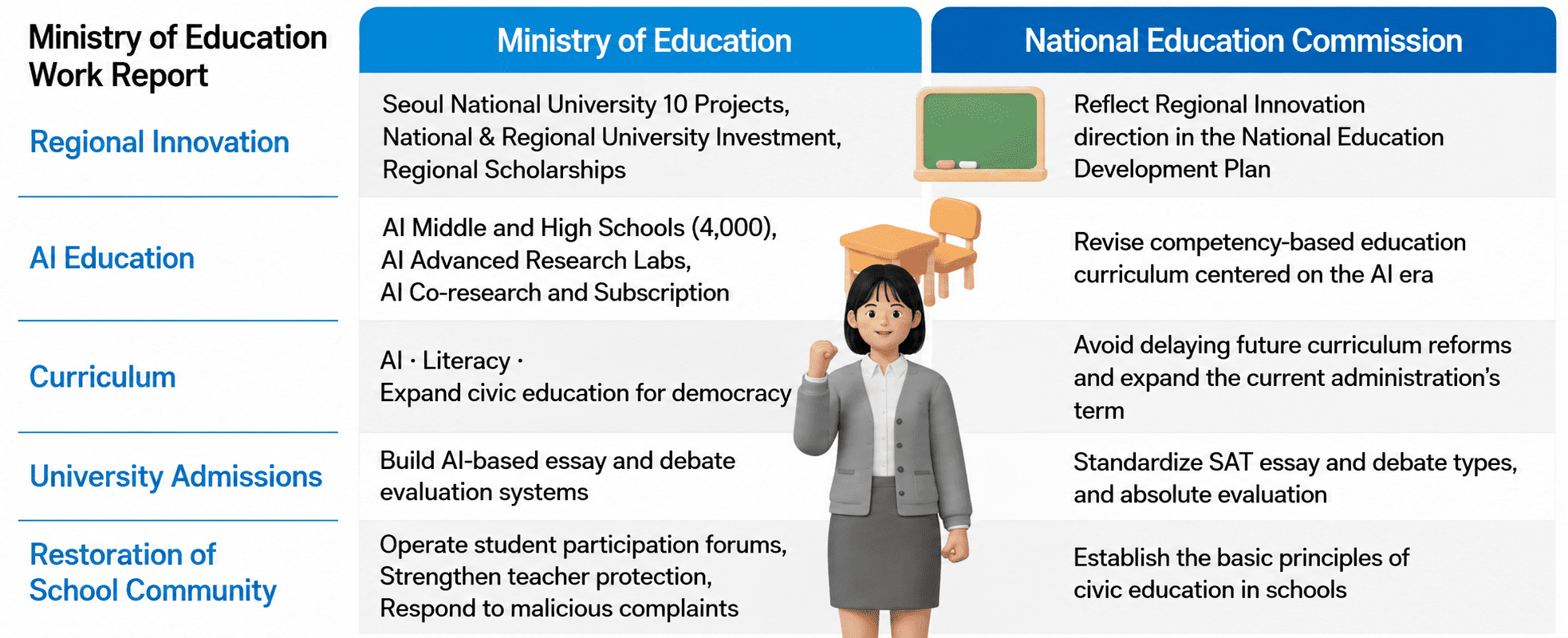
1. Unprecedented Full Scholarships for Freshmen at 30 Regional National Universities with Phased Expansion to All Grade Levels
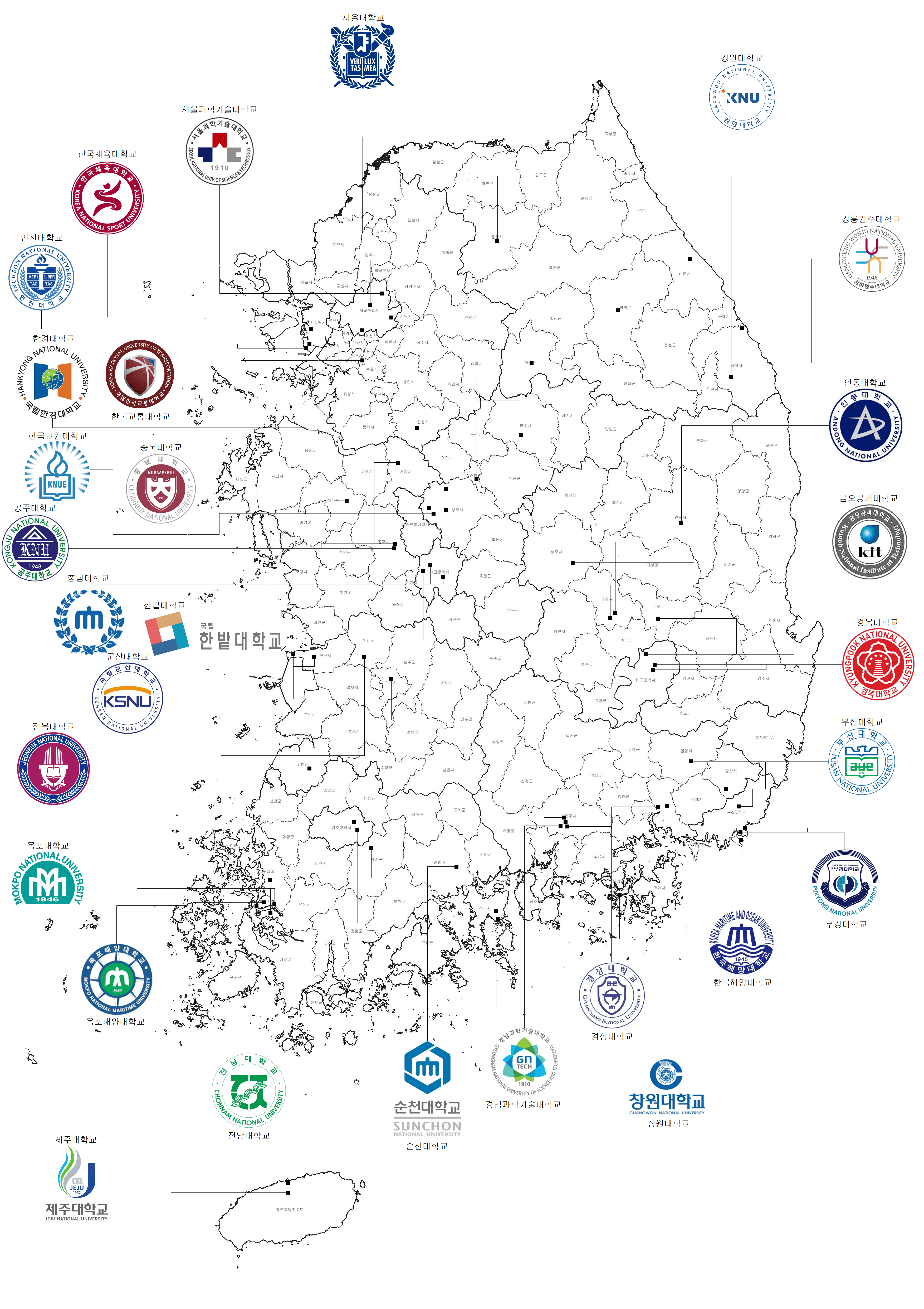
To prevent the severe outflow of talented youth into the Seoul capital region and foster balanced national growth, the Ministry of Education unveiled a plan to cover full tuition for freshmen entering 30 regional national universities. During the policy briefing, Education Minister Choi Kyo-jin officially stated that the government will drastically scale up state scholarships for students attending regional national universities to encourage talented youth to settle in regional areas.
Currently, total annual tuition across regional national universities stands at approximately 990 billion KRW ($730 million). Providing full coverage for roughly 60,000 incoming freshmen per year requires an estimated 200 billion KRW ($147 million). Because existing state scholarship programs already cover about 100 billion KRW of this amount, the net additional budget needed is approximately 100 billion KRW per year. The Ministry plans to finalize specific implementation guidelines by the end of this month following consultations with fiscal authorities.
However, the government noted that children from high-income brackets or students in high-cost professional tracks such as medical schools may be excluded from full coverage. Expanding full scholarship coverage to upperclassmen (2nd to 4th years) is projected to cost around 400 billion KRW ($295 million) annually, with the exact timeline and scope to be determined in conjunction with future local education finance grant reforms.
Freshman Tuition-Free Education Initiative Initiated! With an additional annual budget of 100 billion KRW, tuition for regional national university freshmen will be virtually waived, with potential expansion to all undergraduate levels requiring 400 billion KRW annually.
2. Expansion of Regional Private University Support, 'Reverse Discrimination' Backlash, and Free Childcare for 3-Year-Olds
Alongside public university support, the Ministry presented restructuring plans for the existing 'Regional Talent Scholarship' (valued at approximately 80 billion KRW) to support private regional institutions. Previously, eligibility was restricted to high school graduates from non-capital regions attending regional private universities; under the new plan, students graduating from high schools in the Seoul metropolitan area who enroll in regional private universities will also qualify for financial aid.
However, the announcement immediately sparked intense backlash and allegations of 'reverse discrimination' from private university associations and Seoul-based institutions. Officials from the Korean Council for Private University Presidents pointed out that private regional universities are suffering from severe financial distress and under-enrollment, making exclusive government concentration on national universities inequitable. Furthermore, critics argued that students from regional areas who move to Seoul face significantly heavier living and housing expenses, rendering full tuition coverage solely for regional national university attendees unfair to regional students studying in the capital.
Meanwhile, the briefing also featured key early childhood education and care policy reforms. Aligned with national policy goals, the government confirmed that free education and childcare coverage will expand from 4–5-year-olds to include 3-year-old children starting next year. The Ministry expects this policy to elevate public childcare utilization rates from 45.8% last year to 55% by 2030.
Private University Pushback & Early Childhood Welfare Expansion! While Seoul-origin students at regional private universities gain scholarship eligibility, concerns over equity remain high, and free childcare for 3-year-olds will officially roll out next year.
3. "Selecting Standardized Answers Is Obsolete in the AI Era": Transitioning to Absolute CSAT Grading & Essay-Based Testing
Another central pillar of the briefing was a sweeping structural reform of the CSAT's multiple-choice format, which has remained largely unchanged for over three decades. President Lee Jae-myung emphasized during the report that "in an AI-driven era, the ability to ask meaningful questions outweighs the ability to memorize answers," criticizing standardized multiple-choice testing as detrimental to student development.
National Education Commission Chairman Cha Jeong-in similarly noted that after 32 years of implementation, the current multiple-choice format has reached its technical limits in creating fair, unrepeated items without compromising public education alignment. Chairman Cha argued that introducing descriptive and essay-based assessments where students write out logical solutions in their own words is now inevitable. The NEC is currently formulating a proposal that includes extending absolute grading across all CSAT subjects, transitioning high school transcripts to absolute grading, and introducing descriptive questions into college entrance exams.
Addressing presidential concerns regarding potential private tutoring market spikes during exam transitions, NEC officials explained that implementing subjective and essay-based assessments starting in middle school and providing standardized public school prep materials will allow public education to lead the curriculum, suppressing private academy reliance. The NEC will release the draft of the '2028–2037 National Education Development Plan' in late October and finalize the new college admissions structure by March 2027 following public deliberation.
Overhauling the Multiple-Choice CSAT System! President Lee and the NEC advocated replacing multiple-choice standardized tests with full subject absolute grading and essay-based evaluations, with a formal draft scheduled for release in October.
4. Ensuring Grading Fairness: AI-Assisted Evaluation Infrastructure & Educational Assessment Support Center
To overcome subjective grading concerns—often cited as the primary obstacle to essay-based testing—the Ministry of Education introduced plans to build advanced technological evaluation infrastructure within public education. The Ministry reported that an 'AI-Assisted Evaluation Support System' will be fully established by 2029 to reduce teacher grading burdens and ensure objective scoring for subjective exams.
Additionally, the government plans to upgrade high school transcript monitoring frameworks and institute a 'National Evaluator Certification System' to verify and enhance teachers' professional competencies in essay assessment. By standardizing grading rubrics and sample response models at the national level, the Ministry aims to rapidly distribute reliable evaluation guidelines to classrooms nationwide.
Furthermore, discussions advanced regarding the establishment of a dedicated 'Educational Assessment & Exam Support Center' (tentative title) to oversee exam integrity and prevent errors in high-stakes testing. Through standardized AI systems and specialized administrative bodies, educational authorities expressed confidence in handling modern college entrance evaluations within public schooling while curbing private tutoring dependencies.
Infrastructure for Grading Objectivity! By 2029, an AI-Assisted Evaluation System, teacher certification programs, and a dedicated Educational Assessment Support Center will be deployed to guarantee fair essay grading.
| Policy Initiative | Core Contents & Execution Plan | Required Budget & Timeline |
|---|---|---|
| 1. Regional Public University Full Scholarships | Full tuition coverage for ~60,000 incoming freshmen across 30 regional national universities (undergrad expansion under review) | Freshmen: 200B KRW/yr (100B net new); Upperclassmen expansion: 400B KRW/yr |
| 2. Regional Private University Support | Removal of restrictions on 'Regional Talent Scholarships', extending eligibility to capital-region high school graduates attending regional private universities | Utilizing existing Regional Talent Scholarship budget (~80B KRW) |
| 3. Expansion of Free Childcare | Extending free public education and childcare coverage from 4–5-year-olds to 3-year-old children | Enacted starting next year (Targeting 55% public care utilization by 2030) |
| 4. CSAT System Reform | Shifting to absolute grading across all subjects and introducing descriptive/essay-based test items | Draft release in Oct 2026 → Finalization in Mar 2027 |
| 5. Grading Fairness Infrastructure | Deploying AI-Assisted Evaluation System, national teacher evaluator certification, establishing Assessment Support Center | Targeting full AI evaluation system rollout by 2029 |
[Key Takeaways] 5 Summary Points on the H2 2026 Education Policy Briefing
1. Free Tuition Push for Regional Freshmen: Full tuition scholarship plans launched for 60,000 incoming freshmen at 30 regional national universities (requiring 100 billion KRW in net new funds).
2. Eased Eligibility for Private Colleges: Capital-region students enrolling in regional private universities gain access to Regional Talent Scholarships.
3. Equity and Reverse Discrimination Debates: Backlash emerges from private university presidents and students from regional areas attending Seoul colleges over selective support.
4. Radical CSAT Structural Reform: Move away from 32-year multiple-choice exams toward full-subject absolute grading and essay-based assessments starting late October.
5. AI-Powered Scoring Infrastructure: Deployment of AI grading support systems by 2029 alongside teacher evaluation certification to guarantee objective scoring.
Related Tags (9): RegionalNationalUniversityScholarship, RegionalCollegeTuitionFree, RegionalTalentScholarship, EssayBasedCSAT, AbsoluteGradingCSAT, MinistryOfEducationBriefing, MinisterChoiKyoJin, NECChairmanChaJeongIn, 2028NationalEducationPlan
728x90
반응형
그리드형(광고전용)
'오늘의 일들 > Korea Today's News' 카테고리의 다른 글
| Controversy Over Rep. Hwang Hee's 'Bus House' Proposal (0) | 2026.08.07 |
|---|---|
| Korea Football Association Referee Sexual Bribery Scandal (0) | 2026.08.06 |
| Unprecedented $6.2M Embezzlement Scandal Hits K League 2 Side Gimpo FC (0) | 2026.08.04 |
| Government supports discounts on processed foods…Up to 57% off (0) | 2026.08.03 |
| Yangsan Hits 42.5°C Breaking All-Time 122-Year Korean Weather Record (0) | 2026.08.02 |
댓글 영역