고정 헤더 영역

상세 컨텐츠
본문 제목
Jeju Second Victim of False Closures Found Dead After 51 Days -- Probe Expands Nationwide
본문
반응형
[26.08.23] Jeju Second Victim of False Closures Found Dead After 51 Days -- Probe Expands Nationwide
A second missing-person case handled by the same officer accused of falsely closing the Jang Mi-ran report has ended in tragedy: a man in his 60s, identified as B, was found dead 51 days after his family first reported him missing. With two cases now confirmed to have been falsely closed by the same officer using a similar method, the National Police Agency has launched a nationwide review of how missing-person cases are handled, and Prime Minister Han Duck-soo has expressed strong regret over the affair and ordered a thorough investigation along with measures to prevent recurrence.
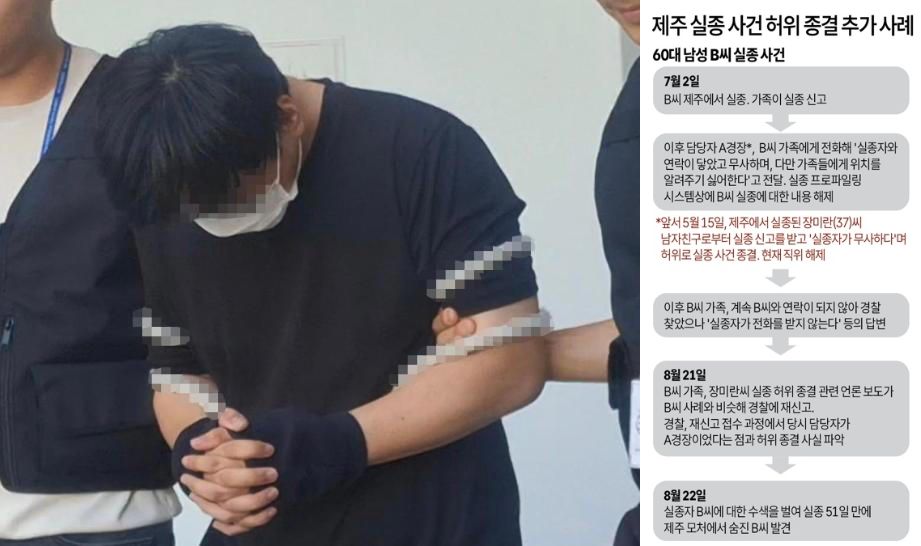
1. The Second Victim, Mr. B, Found Dead After 51 Days
The family of Mr. B, a man in his 60s, filed a missing-person report with police at around 6:02 p.m. on July 2. Officer A, who was handling the case at the time, closed it about five and a half hours later, at around 11:38 p.m., telling the family that "contact had been made with Mr. B and he did not want his location known." In reality, Mr. B had had no contact with his family at all.
Still uneasy, the family reached out to police two more times, on July 27 and August 6, but reportedly received only dismissive responses such as "he's not answering his phone" and "the family should look into it themselves," without any real follow-up. After learning of the Jang Mi-ran case through news coverage, the family filed another missing-person report at around 3:52 p.m. on August 21. Once police realized the officer who had handled the earlier case was the same Officer A, they launched an immediate search.
The renewed search found Mr. B dead in an area of Gujwa-eup, Jeju City, on August 22, the day after the new report was filed -- 51 days after the original report. Police said no signs of foul play have been found so far, and it remains unconfirmed whether the false closure had any direct connection to his death.
An arbitrary closure just five and a half hours after the report, followed by two dismissive responses… The truth only came out after the family's third attempt to seek help.
2. A Grieving Family Speaks Out -- "My Father Came Back as a Body"
Mr. B's son held a press conference in front of Jeju Seobu Police Station on August 23, saying through tears of anger, "We waited, believing police when they told us my father was safe and simply didn't want his location known -- but he came back to us as a body, 51 days after we first reported him missing." He said that right after filing the report on July 2, the officer told him his father was safe, but he remained uneasy and reached out to police for help two more times.
"When I saw the news about the false case closures reported in connection with [the Jang Mi-ran case], it sounded just like what happened with my father, so I filed another report on the 21st," he said. "The very next day, a body believed to be my father was found." He went on to demand that police clarify whether the judgment and actions taken at the time of the initial report were appropriate, and whether an active search had actually been conducted -- "not just an apology, but accountability if something was done wrong." Another family member present said, "What was the police doing while a person was left to decompose down to the bone, beyond recognition?"
Three separate pleas for help from the family, met only with dismissive answers… The family is now demanding a full accounting of the initial response and accountability for those responsible.
3. A Repeated Pattern -- Closing Cases Without Confirming Safety
The troubling part is that the same officer used a similar method in both cases. Officer A is also accused of closing the Jang Mi-ran case in May by claiming contact had been made with her, without actually confirming her safety. After the initial report, officers on the ground began questioning people and searching based on her phone's location data, but withdrew once the case was closed. Later checks of both her phone and the officer's work phone found no record of any call between them.
When Jang's family filed another report about two months later, the investigation resumed -- but by then, much of the surrounding CCTV footage that could have traced her movements had already exceeded its retention period and been deleted. Investigators were left trying to retrieve, far too late, information that could have been secured right after she went missing. Both cases share the same pattern: closed within hours of the report, based solely on a one-sided claim that "contact had been made."
Police are now conducting a full review of every other case handled by the missing-person investigation team where Officer A worked, to check whether there are additional instances of false or improper case closures.
Both cases closed on nothing more than a claim of "contact made," with no in-person confirmation… The repeated pattern suggests this goes beyond one officer's individual misconduct.
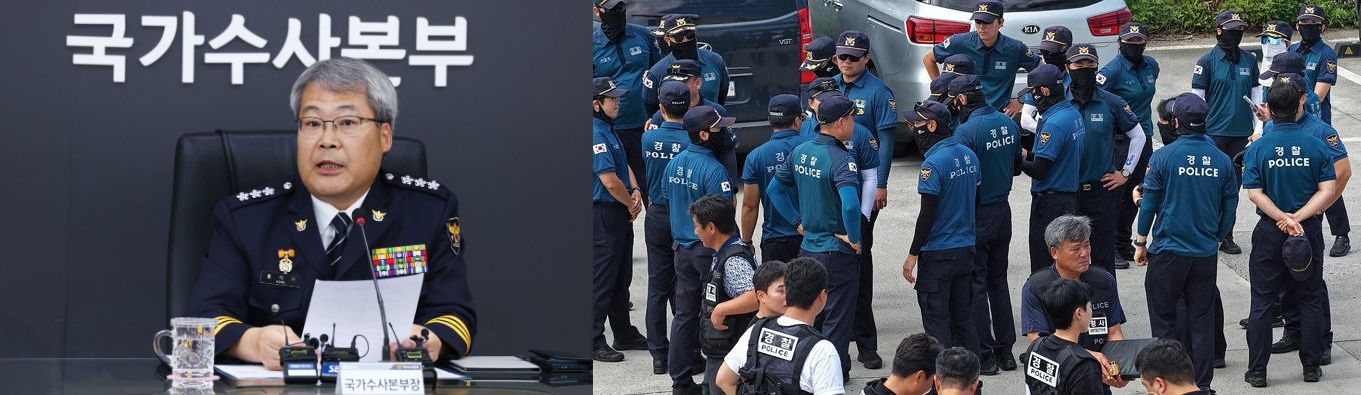
4. System Loopholes and the Gap in How Adult Missing Persons Are Managed
This case has also exposed flaws in how police manage missing-person cases more broadly. Under current procedure, an officer closing a case is required to report the details to a supervisor, such as a team leader or division chief -- but the actual step of removing a case from the Missing Person Profiling System can be carried out directly by the officer in charge. In effect, the reporting/review process and the authority to close a case in the system were separated, meaning that even when a supervisor was informed, there was no mechanism requiring final sign-off on what the officer had actually entered into the system.
The system for managing adult missing-person cases also deserves scrutiny. Under the current Act on the Protection and Support of Missing Children and Others, the categories directly covered are children under 18 at the time of disappearance, along with people with intellectual, autism-spectrum, or mental disabilities, and dementia patients. Adults who don't fall into these categories are classified and managed as "runaways" under a separate National Police Agency regulation.
The scale of adult missing-person cases is far from small. According to the Jeju Police Agency, 2,914 missing-person reports for adults aged 18 and over were filed in Jeju between 2023 and July of this year -- more than double the 1,341 reports involving children under 18 over the same period. As of a tally taken on August 21, 15 adults remained unlocated since being reported missing, compared to just three children -- a fivefold difference.
A system that separates reporting from final closure authority, and a structural gap in how adult cases are managed… This points to a systemic flaw, not just individual misconduct.
5. Nationwide Review and Government Response -- PM Orders "Thorough Investigation"
The National Police Agency has launched a nationwide review to check whether similar cases exist elsewhere in the country. It is also improving the missing-person management system so that when an officer requests to close a case, a supervisor must review and grant final approval. Even so, a fundamental question remains: will an added layer of supervisor approval actually catch a case where an officer enters false information from the start? Observers say the reform will only be effective if it is paired with a process for verifying, through actual records, whether contact or an in-person meeting took place and whether the person's safety was truly confirmed.
Prime Minister Han Duck-soo expressed strong regret over the case on the morning of the 23rd and ordered the National Police Agency to conduct a thorough investigation and establish fundamental measures to prevent a recurrence. He also instructed police to mobilize all available resources for the search, and to respond with zero tolerance toward prank calls and fake news that add further distress to the families of missing persons.
Hong Seok-gi, head of the National Police Agency's National Office of Investigation, visited the Jeju Police Agency the same day, saying, "Please work to find clues to the safety and whereabouts of missing persons as if you were searching for your own family. Missing-person cases are directly tied to the public's life and safety, so investigations must be more accurate and swift." Meanwhile, Jang Mi-ran remains missing more than three months after the original report, and police continue to focus their search around the Hallim Port area.
Two confirmed false closures have triggered a nationwide review… Government-level measures to prevent recurrence are now underway in earnest.
| Category | Details |
|---|---|
| Second Victim | Mr. B, in his 60s; found dead in Gujwa-eup, Jeju City on Aug. 22, 51 days after the July 2 report |
| False Closure | Report at 6:02 p.m. closed 5.5 hours later at 11:38 p.m. with claim "contact was made" |
| Family's Follow-Ups | Reached out again on July 27 and Aug. 6, received only dismissive responses |
| New Report and Discovery | New report filed at 3:52 p.m. on Aug. 21; body found the next day, Aug. 22 |
| System Flaw | Reporting/review process separated from system closure authority; no final supervisor approval mechanism |
| Adult Missing Persons Statistics | 2,914 adult missing-person reports in Jeju (2023-July 2025), more than double the 1,341 for children |
| Government Response | PM orders full investigation and prevention measures; National Police Agency launches nationwide review |
[Summary] 5 Key Facts on the Jeju Missing Person Case Update
- 1. Second victim found dead: Mr. B was found dead on August 22, 51 days after his family's initial report.
- 2. Three pleas from the family: The family reached out to police three times but received only dismissive responses.
- 3. A repeated pattern of false closures: Both cases were closed within hours based solely on a claim of "contact made," with no in-person verification.
- 4. Gaps in the system and regulations: No supervisor approval mechanism existed, and adult missing-person cases fall into a regulatory gap.
- 5. A nationwide response: The National Police Agency's review and the Prime Minister's orders have expanded the response nationwide.
Related tags: Jeju missing person, Jang Mi-ran, Officer A, false case closure, nationwide investigation, missing person profiling system, Prime Minister order, adult missing persons
728x90
반응형
그리드형(광고전용)
댓글 영역