고정 헤더 영역

상세 컨텐츠
본문 제목
25.07.13.Today News : Bangudae Petroglyphs Listed as UNESCO World Heritage Site
본문
반응형
Bangudae Petroglyphs Listed as UNESCO World Heritage Site
- 6000 Years of Rock Art Tradition in Ulsan Recognized, UNESCO Praises the Site’s Creative Depictions and Ancient Artistic Value
The petroglyphs in the Bangudae stream area of Ulsan, depicting prehistoric life on the Korean Peninsula, have been inscribed on the UNESCO World Heritage List. With this addition, South Korea now holds 17 UNESCO World Heritage properties. The site gained international acclaim for its rare depictions of whale hunting and artistic innovation.
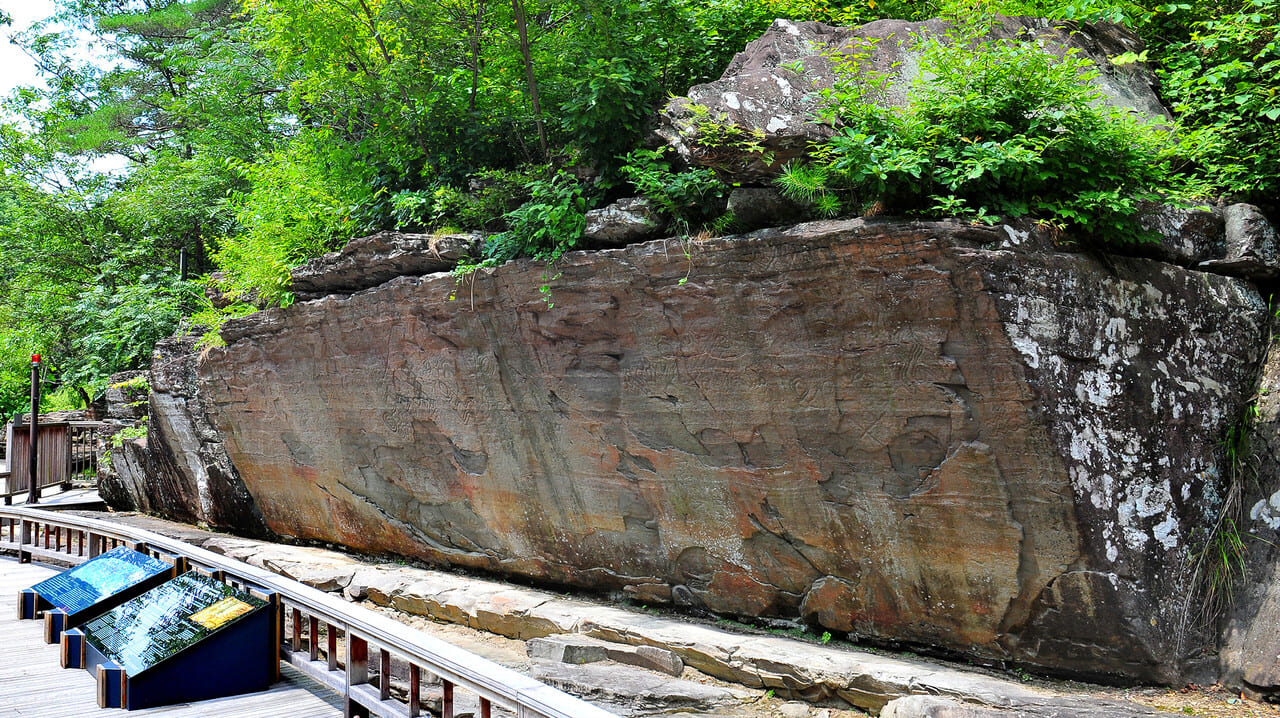
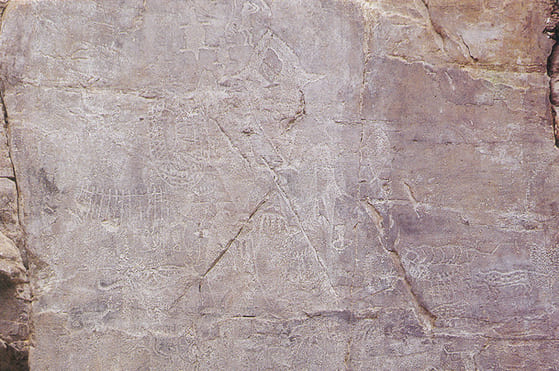
The petroglyphs located along the Bangudae stream in Ulsan have officially been inscribed on the UNESCO World Heritage List. The decision was made on July 12 (local time) during the 47th session of the UNESCO World Heritage Committee held in Paris, France.
The "Bangudae Petroglyphs" represent a remarkable legacy of rock art traditions spanning approximately 6,000 years on the Korean Peninsula. The site consists of the Bangudae Petroglyphs in Daegok-ri and the Cheonjeon-ri Petroglyphs, which together showcase the thoughts and daily lives of ancient Koreans from the Neolithic era to the Silla period through various carvings, symbols, and patterns.
Discovered in 1971, the Bangudae site contains over 300 intricate images, including whales, seals, hunters, harpoons, shamans, turtles, and tigers. It is particularly renowned for its depiction of whale hunting scenes, which are extremely rare in global rock art traditions.
The Cheonjeon-ri Petroglyphs, meanwhile, display over 600 examples of geometric patterns, early writing forms, and symbolic motifs, serving as an important site for understanding the chronological development of rock art on the Korean Peninsula.
UNESCO stated that “the realistic and vivid depictions, combined with a unique composition, exemplify the creativity and artistry of ancient Koreans. This is a distinctive cultural heritage site that expresses rare subjects in imaginative ways.”
According to the Cultural Heritage Administration, the petroglyphs hold historical significance as the origin of Korean art and as a visual language that predates written scripts, thus offering immense value to human history.
President Lee Jae-myung remarked, “It has been over 50 years since this masterpiece, shaped by humans and nature over millennia, was first discovered. Now it is finally recognized as a heritage worth preserving for all humanity.” He further emphasized the importance of preserving the site to international standards and using it as a resource to boost local tourism and the economy.
However, the Bangudae Petroglyphs have long been exposed to the risk of damage due to annual submersion caused by the Sayeon Dam, completed in 1965. To address this, the government launched a design project in April last year to install a floodgate, which is expected to reduce annual submersion time to just 0.8 hours per day on average once completed.
UNESCO also included several conditions for the inscription, requesting regular updates on the floodgate project, effective operation of the Bangudae World Petroglyph Center, implementation of a community-based management system, and prior notification of any future development plans.
Choi Eung-cheon, head of the Cultural Heritage Administration, stated, “We will work closely with local governments and civil society to pass down the Bangudae Petroglyphs to future generations.”
With this latest inscription, South Korea now holds a total of 17 World Heritage sites—15 cultural and 2 natural.

One-line summary : The Bangudae Petroglyphs in Ulsan have been inscribed on the UNESCO World Heritage List, bringing South Korea’s total to 17 heritage sites.
List of UNESCO World Heritage Sites in South Korea

1 Seokguram and Bulguksa Temple
2 Janggyeongpanjeon, Haeinsa Temple
3 Jongmyo
4 Changdeokgung Palace
5 Hwaseong
6 Gyeongju Historic Area
7 Gochang, Hwasun, and Ganghwa Dolmen Ruins
8 Jeju Volcanic Island and Lava Cave
9 Tomb of the Joseon Dynasty
10 Historic Villages of Korea: Hahoe and Yangdong
11 Namhansanseong Fortress
12 Baekje Historic Site
13 Sansa, Korea's mountain monastery
14 Seowon, Korea
15 Tidal Flats of Korea
16 Gaya Tomb
17 Petroglyphs of Bangucheon
728x90
반응형
그리드형(광고전용)
댓글 영역