고정 헤더 영역

상세 컨텐츠
본문 제목
[26.03.04] Gasoline Surges 54 Won in One Day to 2-Year High, Government Launches Collusion Probe
본문
반응형
Gasoline Prices Jump 54 Won in a Single Day Amid War Fallout…Government to Inspect Possible Collusion Among Gas Stations
📍Highest Level in 2 Years and 5 Months…Fair Trade Authorities Strengthen Market Surveillance, Inflation Concerns Rise
Amid the war between the United States, Israel, and Iran, domestic gasoline prices have reached their highest level in approximately two years and five months, prompting the government to inspect abnormal price hikes at gas stations. Possible regional collusion using surging global oil prices as a pretext is expected to be a key focus.
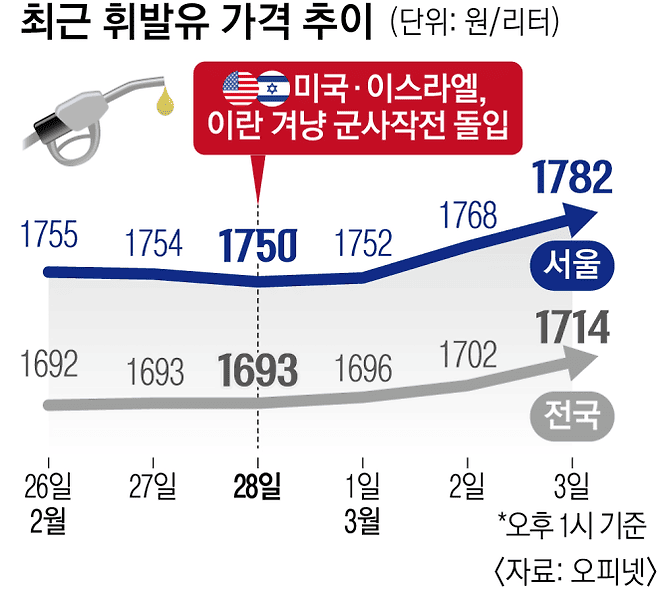
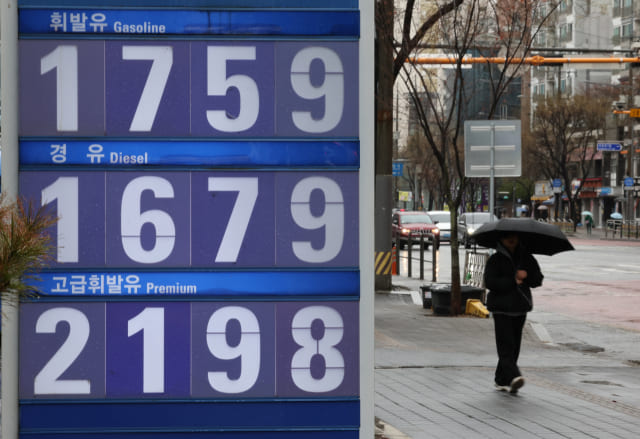
🔹 54-Won Daily Surge…Nationwide Average Exceeds 1,777 Won
According to relevant ministries on the 4th, the Fair Trade Commission and the Ministry of Trade, Industry and Energy are reviewing measures to prevent excessive price hikes by gas stations and refiners.
Data from the Korea National Oil Corporation’s Opinet system show that as of 4 p.m., the nationwide average price of regular gasoline stood at 1,777.52 won per liter, up 54.48 won (3.16%) from the previous day—the highest level since October 2023.
The Seoul average reached 1,843 won, while Sejong, Daejeon, and Incheon approached the 1,800-won mark. Diesel prices also surged nearly 6% from 1,634.62 won to 1,728.85 won.
🔹 Ignoring the Usual Lag?…Preemptive Hikes and Hoarding Suspected
Typically, changes in global oil prices are reflected in domestic prices with about a two-week lag. However, following reports of a possible closure of the Strait of Hormuz, some stations reportedly raised prices preemptively.
Industry observers also point to possible hoarding and synchronized regional price movements. A daily increase exceeding 2% is highly unusual over the past decade.
The government is considering reactivating or expanding the interagency petroleum market monitoring system previously used during the October 2023 Israel–Hamas conflict.
🔹 Inflation Risks Resurface…$10 Oil Increase May Add 0.6 Percentage Points
Rising oil prices could stimulate broader consumer inflation. Gasoline and diesel carry relatively high weights in the consumer price index.
In July 2022, when petroleum prices rose 35.2% year-on-year, overall inflation climbed to 6.3%.
Morgan Stanley economist Catherine Oh estimated that a $10 per barrel increase in global oil prices could raise South Korea’s inflation rate by approximately 0.6 percentage points.
Concerns are growing that inflation, which had stabilized near 2% earlier this year, could become unstable again.
🔹 Small Transporters and Shipping Industry Hit…Logistics Costs May Rise
Self-employed drivers operating commercial vehicles report immediate impacts. A delivery truck operator in Seoul stated that without passing higher fuel costs to customers, maintaining livelihood becomes difficult.
Long lines are forming at relatively cheaper gas stations, and consumers who previously filled partially are now opting for full tanks.
The distant-water fishing and shipping industries are also closely monitoring fuel costs. The Strait of Hormuz is densely surrounded by oil-producing nations, making maritime detours difficult. Rising tanker freight rates combined with surging oil prices could increase operating and logistics costs, affecting corporate earnings and export competitiveness.
🔹 Government Vows Strict Action…Severe Penalties if Collusion Confirmed
The government stated that confirmed market-disruptive practices will be dealt with strictly under competition law. If collusion is detected, fines and criminal charges may follow.
Authorities emphasized that excessive price hikes under the pretext of war directly harm consumers and pledged to strengthen market monitoring.

One-line summary : As domestic fuel prices surged amid war tensions, the government launched inspections into possible gas station collusion to contain inflation risks.
728x90
반응형
그리드형(광고전용)
댓글 영역