고정 헤더 영역

상세 컨텐츠
본문 제목
[26.03.05] Fuel Prices Surge After Middle East Conflict Despite 200 Days of Oil Reserves
본문
반응형
Fuel Prices Surge After Middle East Strikes…Controversy Over Price Hikes Despite 200 Days of Oil Reserves
📍Government Warns of Market Profiteering…President Lee Orders Review of Gasoline Price Cap System
Domestic gasoline and diesel prices have surged following U.S. and Israeli strikes on Iran on February 28, raising controversy over price increases by refiners and gas stations. Despite sufficient domestic oil reserves, fuel prices rose rapidly citing higher global oil prices, prompting the government to launch an investigation into potential profiteering.
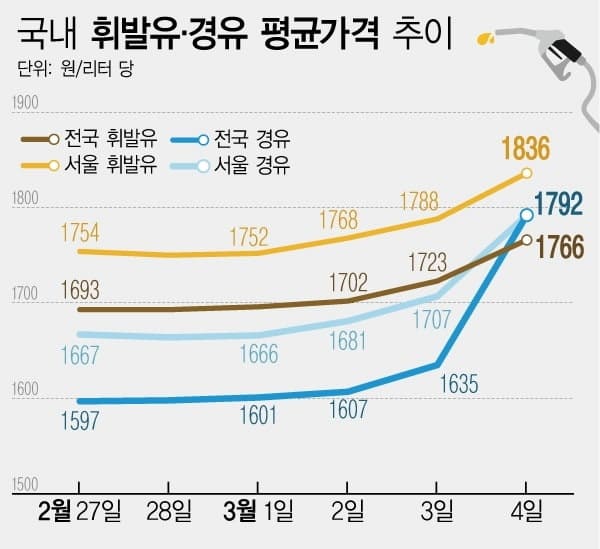
🔹 Prices Raised Immediately After War…“Fast to Rise” Pattern Reappears
According to the energy industry on the 5th, refiners and gas stations raised gasoline and diesel prices almost simultaneously after the strikes on Iran.
However, refiners reportedly told the Korea National Oil Corporation that domestic oil inventories are sufficient and supply will remain stable until at least the end of March.
Observers suspect that some companies may have attempted to maximize profits by using rising global oil prices as a justification for price hikes. Critics note the recurring pattern where domestic fuel prices react quickly to increases in global oil prices but fall slowly when oil prices decline.
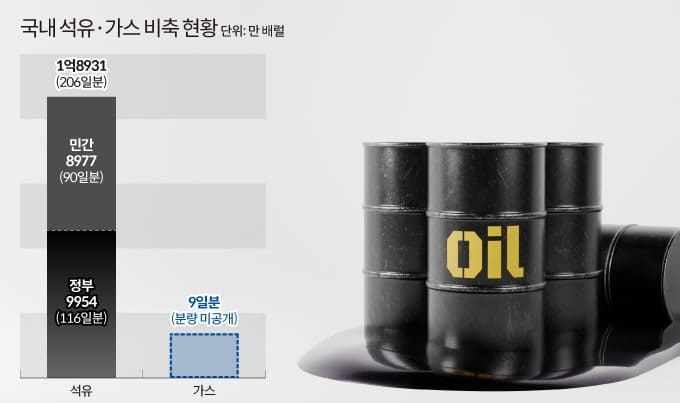
🔹 Oil Reserves Enough for 200 Days…Supply Crisis Unlikely
According to the Korea National Oil Corporation, current domestic oil reserves—including government strategic reserves and private inventories—are sufficient to last more than 200 days.
An official stated that refiners reported no inventory shortages expected until mid-to-late March.
However, the corporation explained that it manages oil statistics but does not have authority to control fuel price increases directly.
🔹 Strategic Reserve Release Under Review
The corporation is reviewing the timing of releasing strategic oil reserves in case the Middle East conflict becomes prolonged and supply instability emerges.
Concerns have also been raised that if private refiners exaggerate supply shortages or misreport inventory levels, government intervention could be delayed while fuel prices continue rising.
🔹 Gasoline Up 114 Won in One Week…Above 1,800 Won for First Time in 3 Years
According to the Opinet fuel price system, the nationwide average gasoline price reached 1,807.1 won per liter, up 29.6 won from the previous day.
Compared with the 1,692.6 won average recorded on February 27, prices rose more than 114 won in less than a week.
This marks the first time in about three years and seven months that the nationwide average gasoline price has exceeded 1,800 won per liter.
🔹 Diesel Prices Also Surge…Immediate Impact from Global Oil
Diesel prices also climbed sharply.
The nationwide average diesel price jumped 56.5 won in one day to 1,785.3 won, while the Seoul average rose 61.4 won to 1,865.4 won.
Normally global oil price changes are reflected in domestic retail prices after a two-to-three week lag, but in this case fuel prices rose almost immediately.
🔹 President Lee Orders Review of Price Cap
President Lee Jae-myung instructed officials to review the implementation of a gasoline price cap during an emergency cabinet meeting.
He stated that although concerns about the Strait of Hormuz and global oil prices exist, actual domestic supply disruptions have not yet occurred.
He criticized sudden price spikes based solely on expectations, calling them attempts to profit from national hardship.
🔹 Dispute Between Refiners and Gas Stations
Responsibility for the price hikes has become a subject of dispute within the industry.
The Korea Petroleum Association stated that gasoline retail prices are determined by individual gas station operators.
However, some gas station operators argue that refiners had already raised wholesale prices, leaving stations little choice but to increase retail prices.
🔹 Government Launches Nationwide Inspection
The Ministry of Trade, Industry and Energy issued a “concern” level resource crisis alert for oil and gas.
A joint task force including the Fair Trade Commission, National Tax Service, police, and the Korea Petroleum Quality and Distribution Authority will conduct nationwide inspections of gas stations starting on the 6th.
Authorities plan to crack down on illegal practices such as fake fuel sales, hoarding, and price collusion.

One-line summary : Following the Middle East conflict, South Korea’s government is investigating possible profiteering and collusion in fuel price hikes while considering price control measures.
728x90
반응형
그리드형(광고전용)
댓글 영역