고정 헤더 영역

상세 컨텐츠
본문 제목
Korean Brand 'Tokyo Berry' Plagued by Copycat Allegations Over Japan's 'Tokyo Banana' Packaging
본문
반응형
[26.07.30] Korean Brand 'Tokyo Berry' Plagued by Copycat Allegations Over Japan's 'Tokyo Banana' Packaging… Department Stores Move to Early Closure of Pop-up Stores
'Tokyo Berry', a newly established South Korean dessert brand, has found itself at the center of intense controversy for allegedly plagiarizing the trademark and packaging design of 'Tokyo Banana', Japan's iconic souvenir and national dessert. With criticism mounting over its fonts, fruit illustration layout, and deceptive marketing tactics that made the brand appear as if it had imported directly from Japan, major department stores are cancelling future pop-up events while Tokyo Banana's parent company has launched an investigation into potential intellectual property infringement.
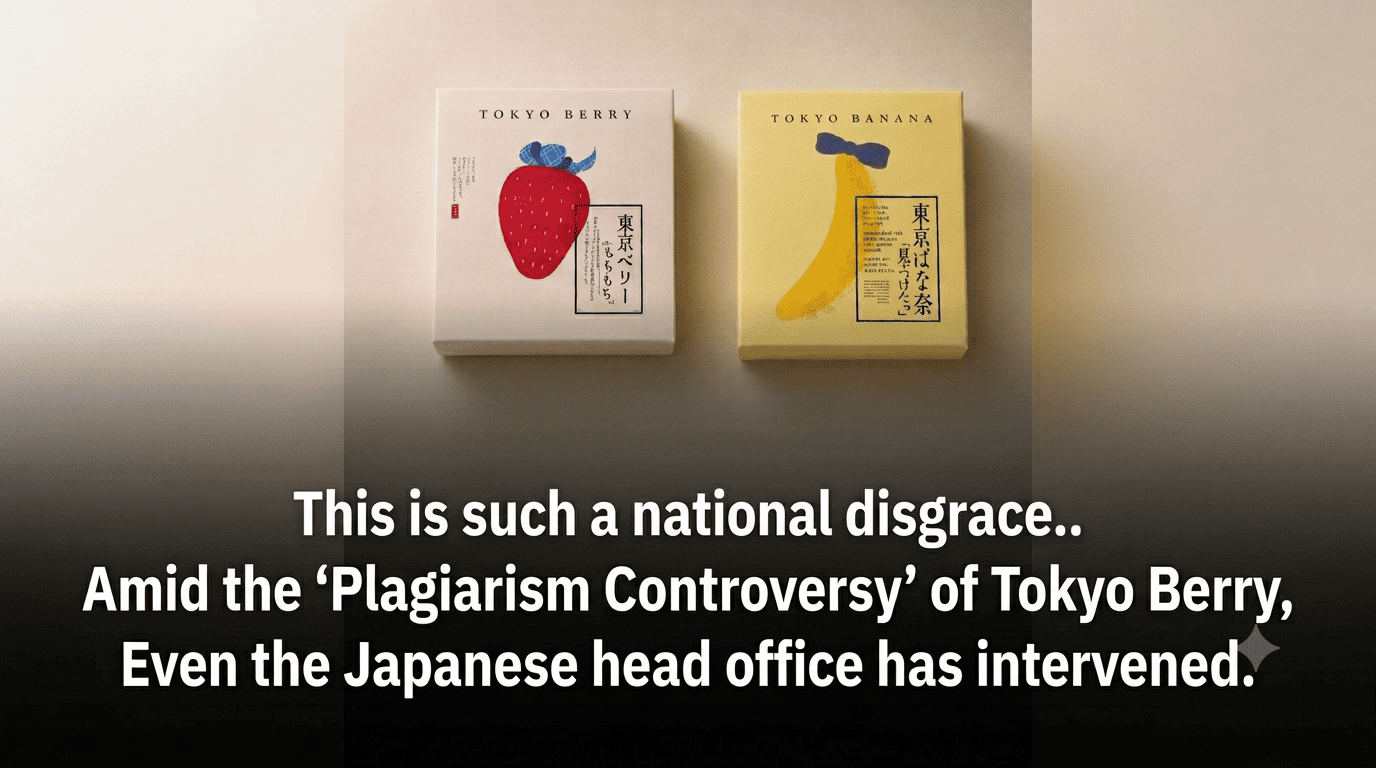
1. Identical Font, Logo Placement, and Illustration… "Blatant Copycat Beyond Limits"
According to the retail industry on July 30, fresh fruit mochi brand 'Tokyo Berry' gained momentum in June by hosting consecutive pop-up stores across major Korean department stores, including Lotte Department Store's Jamsil, Dongtan, and Busan Main branches, as well as Shinsegae Department Store. However, as photos of the physical product packaging spread across online communities and social media, severe design plagiarism allegations erupted.
Side-by-side comparison images posted on social media platforms like Threads revealed that Tokyo Berry used packaging remarkably similar to 'Tokyo Banana', the famous snack launched by Japanese firm Grapestone in 1991. Tokyo Berry adopted an nearly identical English font style and letter spacing for its brand name, matching fruit illustration art styles and placement, and even placed its stamped logo in the exact bottom-right position as Tokyo Banana.
Outraged consumers expressed frustration, stating, "I bought it thinking Tokyo Banana had launched an official strawberry flavor or a sister brand." Online reactions have been harsh, with users commenting, "This is essentially a direct copy-paste," and "It is embarrassing to see a domestic brand blatantly copy an established foreign product like this."
Design plagiarism controversy! Critical feedback highlights that the brand font, fruit illustration layout, and logo placement directly copy Japan's famous 'Tokyo Banana'.
2. "A Tokyo Brand Arriving in Korea?"… Deceptive 'Illusion Marketing' Under Fire
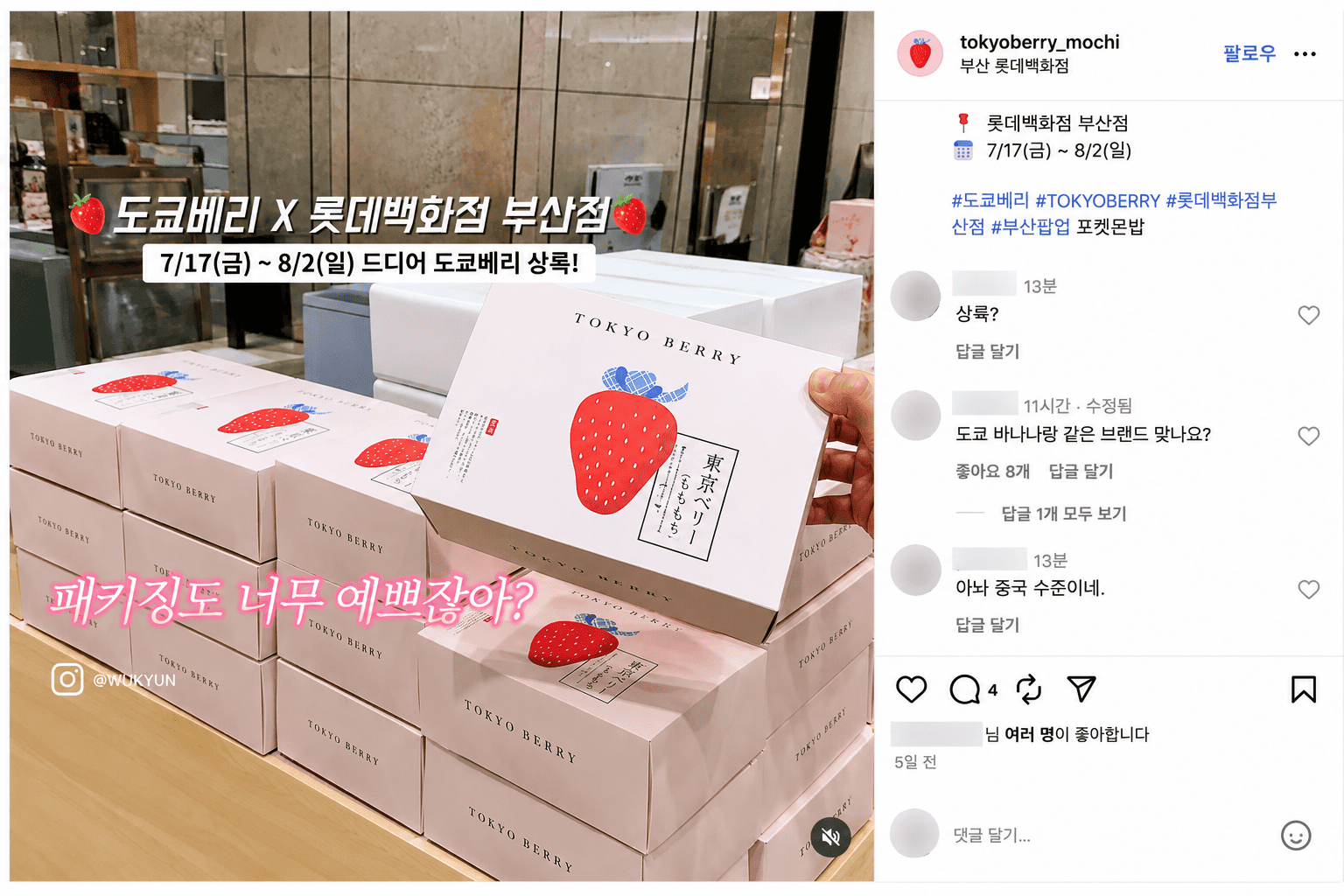
Beyond the product design, Tokyo Berry's promotional strategy has drawn heavy criticism. Despite being a newly launched domestic brand, Tokyo Berry leveraged the 'Tokyo' name and ambiguous promotional phrasing to create the illusion that it was an authentic Japanese brand opening a branch in South Korea.
On its official Instagram, Tokyo Berry posted slogans such as, "Tokyo Berry, capturing the moment fresh fruit and mochi are most delicious, has opened in Korea," and "Welcome (to) Korea, Welcome to Tokyo Berry." Furthermore, viral food channels on social media amplified the confusion by advertising the product as "Tokyo Berry fresh fruit mochi, previously difficult to get even in Japan."
Driven by this marketing, long queues formed at department store pop-up locations, leading consumers to buy the product under the false impression that it was an imported Japanese dessert. Industry observers have condemned this as a deceptive gimmick meant to capitalize on an established foreign brand's reputation rather than competing on original product quality.
Deceptive consumer messaging! Promotional copy like 'Opened in Korea' and 'Welcome to Korea' misled shoppers into believing the brand was imported directly from Japan.
3. Tokyo Banana Headquarters Launches Investigation… Department Stores Cancel Pop-ups
As the controversy spread internationally, Japanese company Grapestone Co., Ltd., the producer of Tokyo Banana, took action. A spokesperson for Tokyo Banana World stated, "We have shared this plagiarism issue with our relevant department and are currently reviewing the facts and examining potential design and trademark infringement."
South Korea's major retail operators are now facing significant embarrassment. An official from Lotte Department Store, which hosted Tokyo Berry pop-ups, stated, "We are fully aware of the design similarities and surrounding controversies," adding, "We will not hold any additional pop-up stores with Tokyo Berry in the future and are currently reviewing the early termination of ongoing pop-up locations."
However, due to existing contractual agreements, certain locations like the Jamsil branch pop-up will operate temporarily through July 30 before shutting down. Both the brand and retail hosts are facing severe backlash for inadequate pre-screening and ethical oversight.
Corporate investigation & retail boycott! Tokyo Banana's Japanese parent company is conducting a legal review, while Korean department stores are cancelling future pop-up stores and moving toward early termination.
4. Social Posts Deleted & Brand Silent… Netizens Slam "National Embarrassment"
As the plagiarism and deceptive marketing controversy escalated, Tokyo Berry deleted or set to private most of its promotional posts on its official Instagram account. The company has remained silent, offering no official statements or responses to media inquiries.
Meanwhile, online criticism continues to mount against both the brand and the department stores' vetting procedures. Netizens expressed disappointment that major department stores failed to verify trademark rights or check viral claims before granting prime pop-up spaces to an unverified brand.
- "I bought it assuming it was an official strawberry variation of Tokyo Banana I used to buy during trips to Japan, only to find out it was a local knockoff."
- "From the logo font to the fruit illustration layout, copying everything so precisely isn't an accident—it's intentional plagiarism."
- "At a time when K-food is gaining global respect, shamelessly copying a famous overseas brand like this is a national embarrassment."
Retail industry insiders emphasize that this incident should prompt major department stores to drastically strengthen their internal verification standards regarding intellectual property rights and promotional accuracy before onboarding pop-up brands.
Official SNS posts wiped! Tokyo Berry made its social media private without issuing an apology, sparking intense public backlash over the distribution of copycat products.
| Category | Key Facts & Progress |
|---|---|
| 1. Event Overview | Domestic fruit mochi brand 'Tokyo Berry' faces severe criticism over packaging plagiarism and misleading marketing inspired by Japan's 'Tokyo Banana' |
| 2. Plagiarism Issues | Nearly identical English logo fonts, letter spacing, fruit illustration layout, and bottom-right logo placement |
| 3. Marketing Controversy | Misled domestic shoppers with slogans like "Opened in Korea" and "Welcome to Korea" to mimic an imported Japanese brand |
| 4. Tokyo Banana Response | Parent company Grapestone shared the issue internally and launched a review into fact-finding and legal/design infringement |
| 5. Retailer Actions | Lotte Department Store cancelled all future pop-up plans and is reviewing early termination of current operations (SNS posts made private) |
[Key Summary] 5 Takeaways on Tokyo Berry Plagiarism Controversy & Pop-up Shutdown
1. Tokyo Banana Copycat Claims: Korean brand 'Tokyo Berry' accused of copying the packaging design of Japan's famous souvenir snack 'Tokyo Banana'.
2. Deceptive Marketing Tactics: Promoted as a Japanese brand arriving in Korea ("Opened in Korea"), tricking consumers into buying knockoff products.
3. Official Japanese Investigation: Grapestone, the producer of Tokyo Banana, officially initiated an internal review regarding design infringement.
4. Department Store Cutoffs: Lotte Department Store cancelled future pop-ups and is terminating existing pop-up events ahead of schedule.
5. Brand Silence & Public Backlash: Tokyo Berry deleted its social media content without addressing the allegations, driving public outcry over knockoff retail practices.
Related Tags (9): July_30_2026, TokyoBerry, TokyoBanana, DesignPlagiarism, DepartmentStorePopUp, Grapestone, LotteDepartmentStore, TrademarkControversy, DeceptiveMarketing
728x90
반응형
그리드형(광고전용)
댓글 영역