고정 헤더 영역

상세 컨텐츠
본문 제목
[26.03.18] BTS Gwanghwamun Concert Sparks Debate Over Crowd Control and Labor Rights
본문
반응형
Heavy Restrictions Ahead of BTS Gwanghwamun Concert…Debate Over “Excessive Measures” vs “Unavoidable Safety”
📍As building and traffic controls expand and workplace closures spark controversy ahead of a 260,000-strong crowd, tensions rise between safety and rights
Ahead of BTS’s large-scale concert at Gwanghwamun Square in Seoul, authorities have implemented unprecedented levels of control, triggering controversy over public inconvenience and labor rights issues.
🔹Ultra-High-Level Safety Measures for a Massive Downtown Crowd
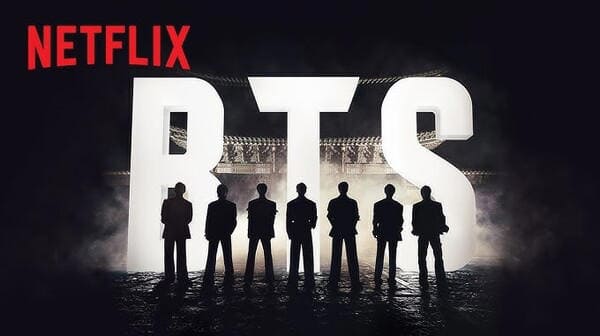
On March 21, BTS will hold a free comeback concert titled “BTS THE COMEBACK LIVE | ARIRANG” at Gwanghwamun Square in Seoul.
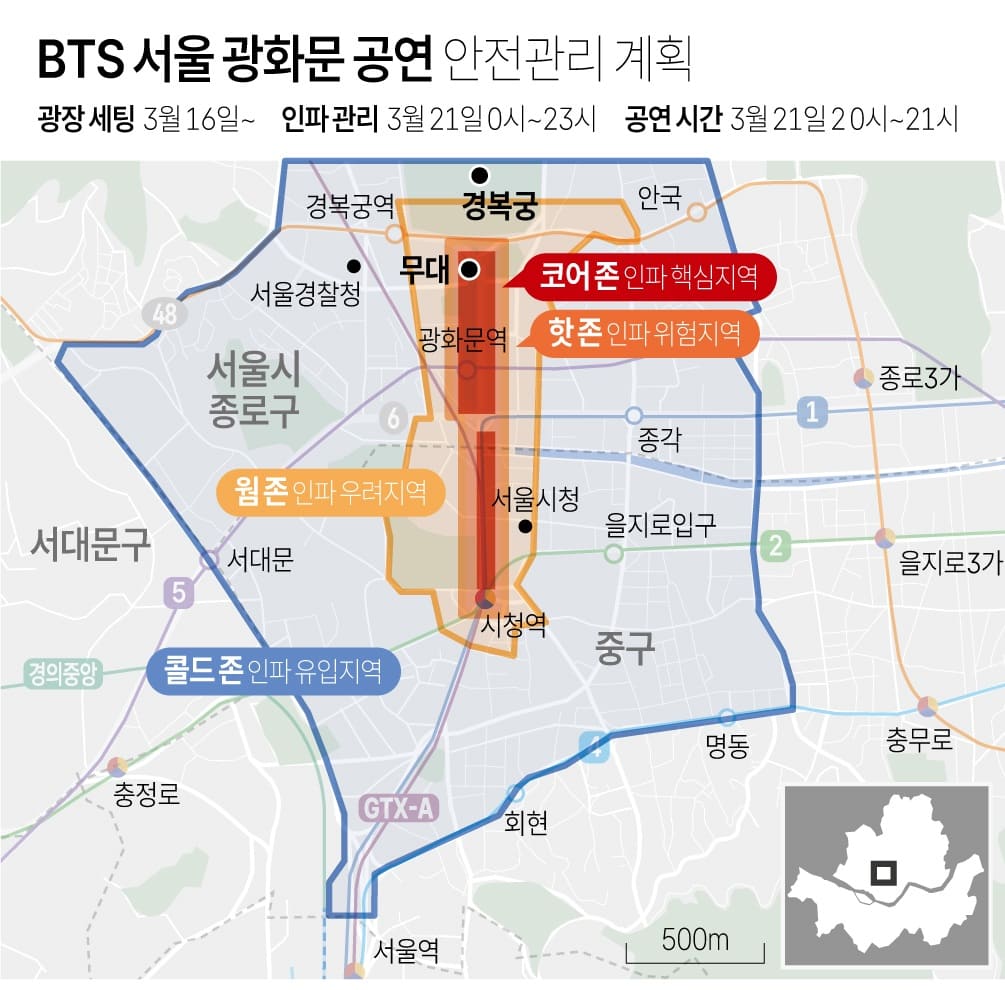
In addition to approximately 22,000 ticketed attendees, authorities estimate that up to 260,000 people—including fans without tickets and international visitors—could gather in the area. This scale far exceeds that of a typical concert venue, effectively turning central Seoul into a massive open-air event space.
In response, police and the Seoul Metropolitan Government have designated 31 nearby buildings as priority control sites. They have requested cooperation from building owners and tenants to implement measures such as partial closure of entrances, restricted access to rooftops and upper floors, and tighter entry controls.
These measures are intended to prevent potential fall-related accidents from elevated locations and to block so-called “unauthorized viewing,” where individuals attempt to watch the concert from surrounding buildings without tickets.
On the day of the event, approximately 6,500 personnel—including riot police units, traffic officers, criminal investigators, and counterterrorism teams—will be deployed. Metal detectors will also be installed at 31 official entry points, and a phased crowd control system will be implemented in high-density areas.
🔹Road Closures and Subway Bypasses Expected to Disrupt City Center
Large-scale traffic control measures will also be enforced.
The section of Sejong-daero between Gwanghwamun and City Hall will be fully closed to vehicle traffic from 9:00 p.m. on March 20 until 6:00 a.m. on March 22, totaling approximately 33 hours. Additional major roads, including Sajik-ro and Saemunan-ro, will also face partial or sequential restrictions.
Public transportation will be significantly affected. On the day of the event, Gwanghwamun Station, City Hall Station, and Gyeongbokgung Station may operate without stopping depending on congestion levels, and some station entrances may be completely closed during peak hours.
Bus services will also be disrupted, with more than 50 routes (and up to 80 including regional lines) expected to be diverted. These measures are likely to cause substantial inconvenience for residents, workers, and businesses in central Seoul.
🔹Public Opinion Divided Between “Overreaction” and “Safety First”
As details of the control measures have been released, public opinion has become sharply divided.
Some citizens have criticized the response as excessive, arguing that such strict measures are unnecessary for a private concert and that shutting down major parts of the city over a weekend is unreasonable. Business owners in the area have also expressed concerns over declining customer access and potential revenue losses.
Others, however, emphasize the importance of safety. They point to the 2022 Itaewon crowd disaster as a reminder of the risks associated with large gatherings and argue that proactive control measures are necessary to prevent similar incidents.
There are also concerns related to broader security risks, including the possibility of terrorism, which further reinforce the need for strict precautions.
Private entities are also taking independent action. One major office building in the area has decided to fully close on the day of the event due to safety concerns, and several businesses, including restaurants and cafes, have opted to suspend operations voluntarily.
🔹Forced Leave Controversy Raises Labor Rights Concerns
The impact of the concert is extending into workplaces as well.
According to a civic labor group, multiple reports have been filed by employees stating that they were instructed to take half-day leave or were told not to come to work on the day of the concert.
These cases arise as some businesses decide to temporarily shut down due to traffic restrictions and safety concerns, making normal operations difficult. However, critics argue that the burden of such decisions is being unfairly shifted onto employees.
Under labor law, annual leave is, in principle, to be taken at the request of the employee. Requiring workers to use leave on specific dates for company convenience may constitute a violation of labor regulations.
In cases where employees are unable to work due to business suspension, they may be entitled to shutdown allowances. However, reports suggest that such compensation is not consistently provided in practice.
Additionally, workers at small businesses with fewer than five employees, as well as freelancers and platform workers, may fall outside the full protection of labor laws, raising concerns about blind spots in worker protection.
🔹Balancing Safety and Rights Emerges as Key Challenge
Experts say the situation highlights structural challenges in managing large-scale events held in dense urban environments.
While strong safety measures are necessary, they argue that greater efforts are needed to minimize the burden placed on citizens and workers.
Labor experts note that even when measures are justified in the name of public safety, it is problematic if the associated costs and disruptions are disproportionately borne by specific groups.
They emphasize the need for clearer guidelines and compensation frameworks to better manage similar large-scale events in the future.
One-line summary : Strict controls and labor controversies surrounding the BTS concert highlight the challenges of managing large-scale urban events.
728x90
반응형
그리드형(광고전용)
댓글 영역