고정 헤더 영역

상세 컨텐츠
본문 제목
[26.06.03] Ballot Shortages, Voting Extensions Fuel Election Management Controversy
본문
반응형
Ballot Shortage Chaos in Korea’s Local Elections… Voting Extended Until 10 p.m., Election Commission Apologizes
📍Ballot papers ran out at several polling stations across Seoul, Gyeonggi, and Incheon, leaving voters waiting for hours; Election Commission issues public apology as both ruling and opposition parties demand accountability
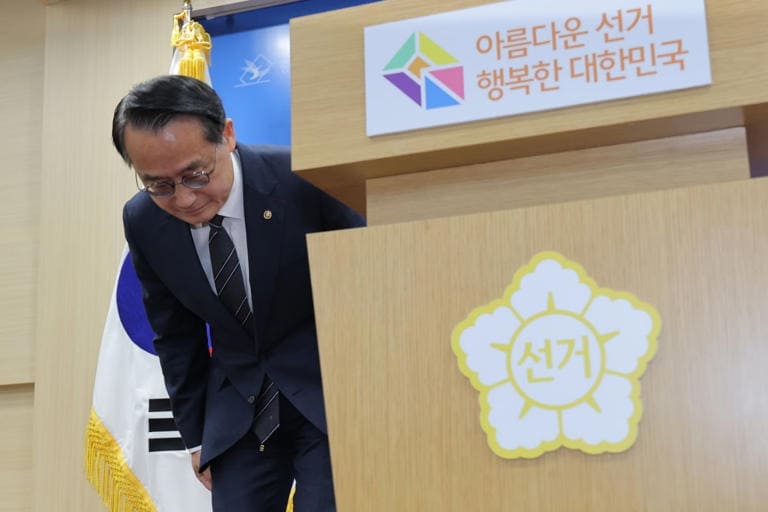
An unprecedented disruption occurred during South Korea’s June 3 local elections as several polling stations in Seoul and the greater metropolitan area ran out of ballot papers, forcing voters to wait in long lines and, in some cases, extending voting hours well beyond the official closing time. At one polling station in Seoul’s Songpa District, voting was extended until 10 p.m. after ballot shortages prevented many voters from casting their ballots on time. The National Election Commission (NEC) later issued a public apology and pledged to investigate the cause of the incident and implement preventive measures, but political controversy over election management failures continues to intensify.

🔹Ballot Shortages Reported Across the Seoul Metropolitan Area
During the main voting day of the local elections, several polling stations in Seoul and surrounding metropolitan regions experienced delays after exhausting their supply of ballot papers.
According to information gathered by the National Election Commission and political parties, ballot shortages were reported at polling stations across Songpa-gu, Gangnam-gu, Gwangjin-gu, and Dongjak-gu in Seoul.
Affected polling stations included Munjeong 1-dong Polling Station No. 4, Munjeong 2-dong Polling Station No. 2, Jamsil 2-dong Polling Station No. 6, Jamsil 4-dong Polling Station No. 5, Jamsil 7-dong Polling Station No. 2, Garak 2-dong Polling Stations No. 3 and No. 7, Wirye-dong Polling Station No. 5, Cheongdam-dong Polling Station No. 4, Gaepo 2-dong Polling Station No. 2, Guui 3-dong Polling Station No. 6, and Noryangjin 1-dong Polling Station No. 7.
The Seoul chapter of the People Power Party later claimed that similar incidents were also identified at Dongchun 1-dong Polling Station No. 6 and Songdo 5-dong Polling Station No. 1 in Incheon, as well as Dongtan 4-dong Polling Station No. 5 in Hwaseong, Gyeonggi Province.
At affected locations, ballot supplies were completely depleted, forcing dozens—and in some cases more than one hundred—voters to wait for extended periods.
Some voters reportedly abandoned the process altogether after waiting for hours, while photos and complaints from the scene rapidly spread through social media platforms and online communities.
Many voters expressed frustration, questioning how election authorities could fail to prepare for turnout levels that they believed should have been reasonably predictable.
Others argued that the Election Commission had failed in one of the most basic responsibilities of administering a national election.
🔹Jamsil 7-dong Polling Station Extends Voting Until 10 p.m.
The most significant disruption occurred at Polling Station No. 2 in Jamsil 7-dong, Songpa-gu.
As ballot shortages caused waiting lines to grow longer throughout the afternoon, election officials eventually decided to extend voting hours from the original closing time of 6 p.m. until 10 p.m. for voters who had already received waiting tickets.
The four-hour extension was widely viewed as an extraordinary measure rarely seen in South Korean elections.
A substantial number of voters who had joined the line before 6 p.m. had still not received ballot papers when the official voting deadline arrived.
Election officials ultimately determined that voting should continue in order to protect those voters’ constitutional right to participate in the election.
As a result, the polling station effectively operated into the night, creating ripple effects that would later affect ballot transportation and vote-counting schedules.
Political figures argued that the incident effectively resulted in an extension of legally established voting hours due to administrative failures rather than extraordinary external circumstances.
🔹Dispute Erupts Over Attempted Removal of Ballot Boxes
The controversy at the Jamsil 7-dong polling station extended beyond the ballot shortage itself.
The Seoul chapter of the People Power Party claimed that election officials attempted to remove ballot boxes while voters were still waiting for ballot papers.
The allegation immediately triggered strong criticism from opposition figures and raised tensions at the polling site.
People Power Party officials, police officers, and concerned citizens gathered at the location as arguments over election procedures intensified.
Several voters reportedly questioned why ballot boxes would be moved before everyone in line had completed the voting process.
One citizen was quoted as saying that election officials should not be allowed to transport the ballot boxes until all waiting voters had been able to cast their ballots.
Following the controversy, election authorities decided to postpone the transportation of ballot boxes until voting for all waiting voters had been completed.
🔹Public Broadcasts Urging Voters to Return Highlight Unprecedented Confusion
The confusion at the polling station did not end there.
Election workers at Jamsil 7-dong Polling Station No. 2 discovered that some individuals who had received waiting tickets had left the area because of the unexpectedly long delays.
Concerned that those voters might lose the opportunity to vote, election officials reportedly requested assistance from nearby apartment complexes.
They asked building management offices to make public announcements encouraging residents who had received waiting tickets to return to the polling station.
According to local reports, several apartment complexes subsequently broadcast messages urging residents to come back and complete the voting process.
The unusual situation drew widespread attention because it is extremely rare for election officials to request public announcements encouraging specific voters to return and cast ballots.
Many local residents expressed disbelief, while critics argued that inadequate election preparations had created a level of confusion rarely seen in South Korea’s electoral history.
🔹National Election Commission Issues Formal Apology
As controversy spread nationwide, the National Election Commission released an official public apology.
Hur Cheol-hoon, Secretary General of the National Election Commission, stated:
“We deeply apologize for causing inconvenience to citizens who visited polling stations to exercise their precious voting rights and for damaging public trust in fair election administration.”
Hur explained that the commission immediately transported additional ballot papers to affected polling stations once the shortages were identified.
He also said that election officials took steps to ensure that voters who were already waiting in line would be able to cast their ballots even after the official closing time.
Hur further emphasized that the commission views the matter with utmost seriousness and pledged to determine the exact causes of the incident after vote counting is completed.
He added that the NEC would identify management failures and establish measures designed to prevent similar incidents in future elections.
🔹Election Commission Cites Higher-Than-Expected Voter Turnout
The National Election Commission attributed the shortages primarily to voter turnout that exceeded expectations.
According to the commission, voter participation increased sharply in several districts, causing ballot supplies to be exhausted much faster than anticipated.
However, both political leaders and civic groups argued that the explanation was insufficient.
Critics pointed out that higher turnout had been considered a realistic possibility long before Election Day and questioned whether election authorities had adequately prepared emergency ballot reserves and distribution systems.
Many observers argued that an institution responsible for managing nationwide elections should have been fully prepared for turnout fluctuations and should not have encountered basic supply shortages.
Some critics further noted that pre-election polling trends and advance voting participation rates had already suggested the possibility of stronger voter engagement.
They therefore called on the NEC to provide a more detailed explanation of what went wrong.
🔹People Power Party Calls Incident an Unprecedented Threat to Democracy
The opposition People Power Party sharply criticized the Election Commission and demanded a full investigation.
Jung Hee-yong, head of the party’s election headquarters, described the situation as:
“A shocking incident that should never happen in a South Korean election in 2026.”
He argued that the Election Commission exists to guarantee fair and transparent elections but instead created circumstances in which voters were unable to exercise their voting rights because of ballot shortages.
According to Jung, the incident represented not merely a mistake but a failure to fulfill fundamental responsibilities.
Co-campaign chairman Song Eon-seok also vowed to launch a comprehensive investigation immediately after the election and promised to hold responsible officials accountable.
Bae Hyun-jin, chair of the Seoul chapter of the People Power Party, described the controversy as a matter that strikes at the very foundation of democracy and pledged to continue pressing for accountability.
Meanwhile, Shin Dong-wook, chair of the party’s Fair Election and Safe Voting Committee, personally visited NEC headquarters in Gwacheon and met with Secretary General Hur Cheol-hoon.
After the meeting, Shin stated that it was difficult to understand how election authorities still lacked a complete picture of the situation even late in the evening.
He argued that such circumstances could lead to suspicions that officials had attempted to downplay or conceal aspects of the incident.
🔹Democratic Party Also Expresses Regret Over Election Preparations
The ruling Democratic Party of Korea also expressed regret over the incident.
Lee Yeon-hee, Strategic Planning Director of the party’s Central Election Campaign Committee, told reporters at the National Assembly that the party would closely monitor developments and urge election authorities to resolve the situation as quickly as possible.
Jo Seung-rae, the party’s chief campaign coordinator, also issued a separate statement criticizing shortcomings in election preparations.
“We express strong regret regarding the election preparations carried out by both the National Election Commission and the Seoul Metropolitan Election Commission,” Jo said.
At the same time, Democratic Party officials emphasized that protecting voters’ rights remained the highest priority and stressed the importance of ensuring that the remainder of the voting process proceeded without further disruptions.
🔹Controversy Expands Into Debate Over Election Integrity
The incident has expanded beyond a simple administrative failure and evolved into a broader debate over election fairness and public trust.
Some political groups that have long questioned the integrity of election administration argued that the ballot shortage controversy demonstrated the need for a comprehensive review of Election Commission operations.
Liberty and Innovation, a political party led by former Prime Minister Hwang Kyo-ahn, issued a statement describing the ballot shortage as a serious issue directly affecting citizens’ voting rights.
The party called for complete transparency regarding every stage of ballot printing, distribution, and management.
Online discussions also intensified, with many citizens demanding explanations for why shortages appeared concentrated in certain areas.
Others argued that the decision-making process surrounding voting-hour extensions should also be carefully reviewed.
Despite the growing controversy, the Election Commission and related authorities have stated that no evidence of election fraud has been identified and maintain that the incident resulted from election management failures rather than intentional misconduct.
🔹Vote Counting Delays and Political Fallout Expected
The consequences of the ballot shortage incident are expected to continue well beyond Election Day.
At polling stations such as Jamsil 7-dong Polling Station No. 2, where voting continued until 10 p.m., ballot transportation schedules were inevitably delayed, affecting subsequent vote-counting operations.
As a result, election officials acknowledged the possibility that vote-counting results in some districts could take longer than originally expected.
Political confrontation over responsibility is also expected to intensify after voting concludes.
The People Power Party has already pledged to pursue accountability and investigate the causes of the shortages, while the Democratic Party has also called for a broader review of election preparations.
There have additionally been discussions about possible parliamentary inquiries and official audits of election administration procedures.
Although the National Election Commission has promised to investigate the exact causes of the ballot shortage incident and announce preventive measures after vote counting is completed, many observers believe the controversy has already inflicted significant damage on public confidence in the nation’s election management system.
One-line summary : Ballot shortages at multiple polling stations during South Korea’s June 3 local elections forced voting-hour extensions, triggered nationwide criticism of election management, and prompted the National Election Commission to issue a public apology while promising a full investigation.
728x90
반응형
그리드형(광고전용)
'오늘의 일들 > Korea Today's News' 카테고리의 다른 글
| [26.06.04] Homeplus to Close 37 Stores, Offer Voluntary Retirement (0) | 2026.06.04 |
|---|---|
| [26.06.02] Kim Se-ui’s Detention Review Request Rejected (0) | 2026.06.02 |
| [26.06.01] Hanwha Aerospace Plant Blast Kills Five Workers (0) | 2026.06.01 |
| [26.05.31]Lee Chae-won Named as Victim in Gwangju Schoolgirl Murder (0) | 2026.05.31 |
| [26.05.30] Unread Election Brochures Spark Waste Debate (0) | 2026.05.30 |
댓글 영역