고정 헤더 영역

상세 컨텐츠
본문 제목
[26.06.05] Ballot Shortage Fallout: NEC Leaders Step Down, Clashes Continue
본문
반응형
Aftermath of the June 3 Local Elections Deepens: From NEC Leadership Resignations to Vote-Counting Clashes
📍Ballot shortage crisis spreads nationwide as controversy over Jamsil ballot boxes intensifies; calls for a parliamentary inquiry and special prosecutor grow amid concerns over election integrity
The fallout from the ballot shortage crisis that occurred during South Korea’s June 3 local elections continues to escalate even after the election concluded. Cases of ballot shortages, temporary voting suspensions, and voting-hour extensions were confirmed at dozens of polling stations across the country, while National Election Commission (NEC) Chairman Noh Tae-ak and Secretary-General Heo Cheol-hoon announced their resignations, accepting responsibility for the situation. At Jamsil 7-dong Polling Station No. 2 in Seoul’s Songpa District, confrontations between protesters and police erupted over the removal of ballot boxes and the vote-counting process, resulting in injuries. Political parties have since called for a parliamentary investigation and the appointment of a special prosecutor, turning what began as an election administration failure into a broader national debate over trust, accountability, and the integrity of South Korea’s electoral system.
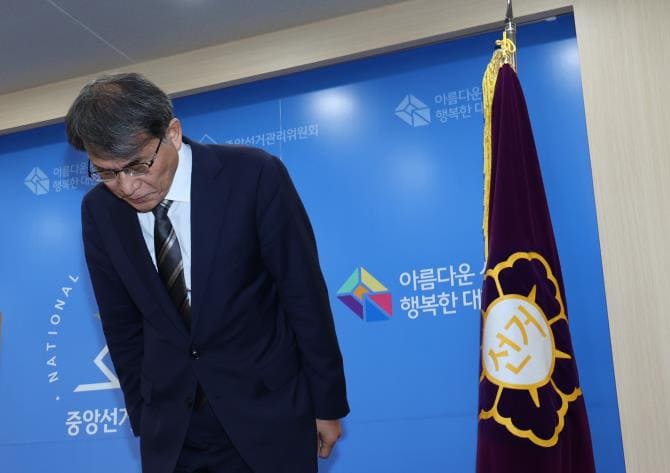
🔹NEC Chairman Noh Tae-ak Announces Resignation
On June 5, NEC Chairman Noh Tae-ak issued a public apology at the commission’s headquarters in Gwacheon, Gyeonggi Province, and announced his intention to resign.
“I deeply accept responsibility for everything that has happened,” Noh said. “I will step down from my position as Chairman of the National Election Commission.”
He added that the incident had undermined citizens’ strong interest and participation in local self-government and damaged public confidence in election administration.
“As chairman, I feel profound remorse and an infinite sense of responsibility for eroding public trust in the electoral process and creating broader skepticism about election management,” he stated.
Noh also pledged full cooperation with any procedures aimed at determining the NEC’s responsibility, including a parliamentary investigation.
“I will faithfully participate in all efforts to establish accountability, including a National Assembly inquiry,” he said. “If the results show that I bear further responsibility, I will not avoid it.”
The chairman also announced plans to establish an independent fact-finding committee composed entirely of outside experts to determine the exact causes of the incident.
🔹Secretary-General Heo Cheol-hoon Also Offers Resignation
During the same announcement, Noh revealed that NEC Secretary-General Heo Cheol-hoon had also submitted his resignation.
As head of the NEC’s administrative office and the official responsible for overseeing election operations, Heo reportedly decided to accept responsibility for shortcomings in election management.
Immediately after the ballot shortage controversy emerged, Heo had publicly apologized to voters and pledged a thorough investigation along with measures to prevent a recurrence.
However, as additional cases of ballot shortages were discovered across the country and criticism of the NEC intensified, Heo ultimately chose to step down.
The resignations create an unprecedented situation in which both the NEC chairman and secretary-general are leaving office simultaneously.
🔹Ballot Shortages Confirmed at 50 Polling Stations Nationwide
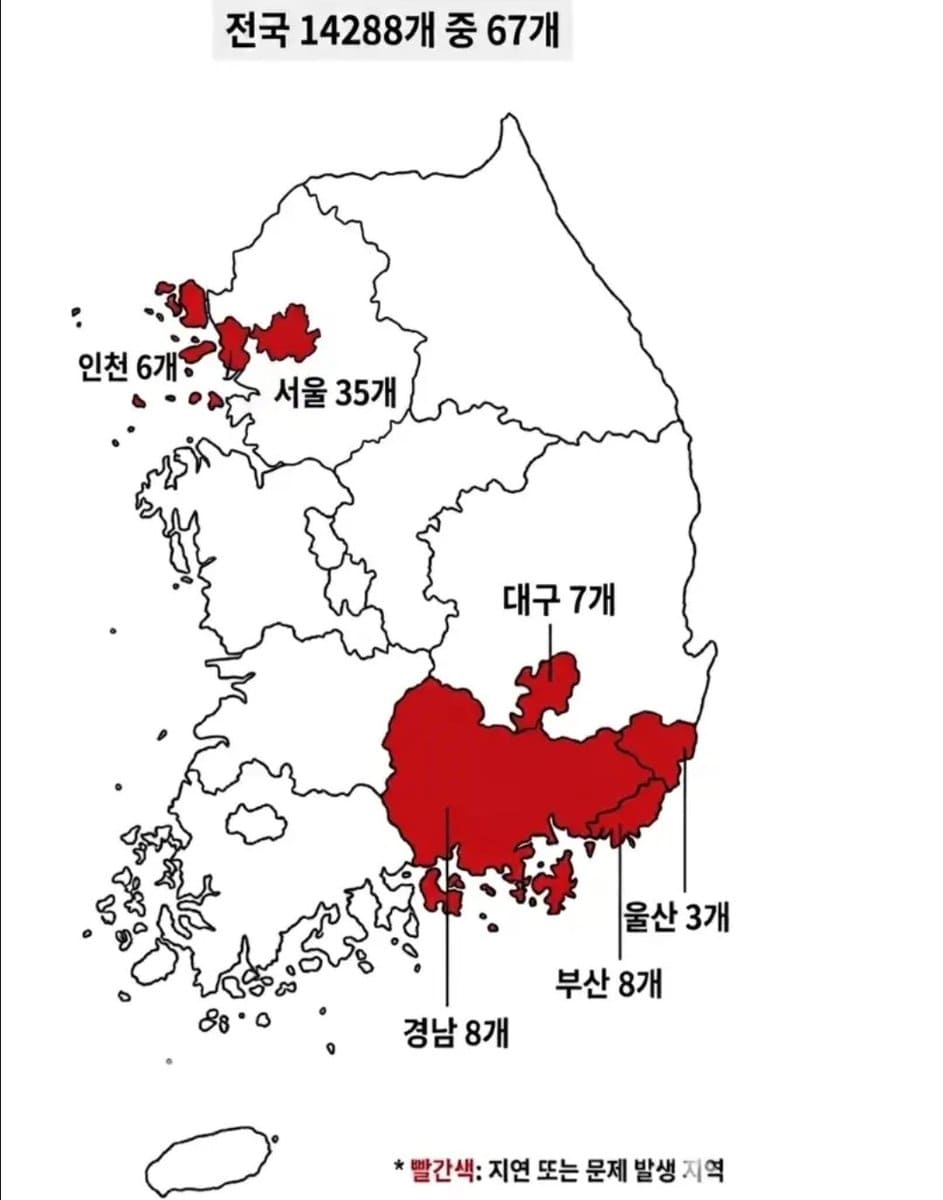
According to data released by the NEC, emergency shipments of additional ballots were sent to 67 polling stations nationwide during Election Day voting.
Seoul accounted for the largest share with 35 polling stations, followed by Busan and South Gyeongsang Province with eight each, Daegu with seven, Incheon with six, and Ulsan with three.
Of those 67 polling stations, 17 ultimately did not use the additional ballots supplied.
However, the remaining 50 polling stations did use the emergency ballot shipments in actual voting operations.
The NEC also confirmed that voting was temporarily suspended and later resumed at 22 polling stations while additional ballots were being delivered.
Observers note that these figures demonstrate the issue was not confined to a handful of polling stations in Seoul but represented a broader election-management problem affecting multiple regions simultaneously.
🔹NEC Explains Ballot Reduction Was Based on Rising Early Voting Rates
The NEC cited a reduction in ballot printing as one of the primary causes of the incident.
According to the commission, early voting rates have steadily increased in recent elections, resulting in large numbers of unused Election Day ballots.
Officials said the commission reduced ballot production in consideration of storage, transportation, retrieval, and disposal costs associated with excess ballots.
As a result, only about 50 percent of the total eligible voter population was covered by printed Election Day ballots for this local election.
Critics, however, argue that election authorities should have anticipated the possibility of higher turnout and that the commission’s demand forecasting was overly optimistic.
Political observers and election experts have also questioned how a national election authority could fail to properly manage one of the most fundamental aspects of election administration: ballot supply planning.
🔹Presidential Office Calls for Measures the Public Can Accept
The Presidential Office stated that it takes the resignations of Chairman Noh and Secretary-General Heo very seriously.
In an official statement, the office said the NEC must provide a convincing explanation and implement strict follow-up measures regarding the concerns caused during the election process.
The statement further stressed that election administration procedures should be comprehensively reviewed and institutional reforms should be carried out responsibly in order to restore public confidence.
The government is expected to monitor the results of the NEC’s investigation before considering any additional measures.
🔹People Power Party: “Resignation Alone Is Not Enough”
The conservative People Power Party argued that the resignations of NEC leadership alone cannot resolve the controversy.
Senior spokesperson Park Sung-hoon stated that “this must not end with symbolic resignations.”
“What the public wants is the truth and appropriate accountability,” he said.
Party leader Jang Dong-hyeok continued his criticism by visiting both the Seoul Election Commission and the National Election Commission.
Jang argued that some of the polling stations affected by ballot shortages were located in areas where certain candidates had received relatively strong support.
“There are aspects of this situation that are difficult to dismiss as mere coincidence,” he claimed.
He added that if the NEC fails to provide clear explanations, a parliamentary investigation and special prosecutor should be launched.
Lawmaker Joo Jin-woo filed a criminal complaint against Noh Tae-ak and Heo Cheol-hoon on allegations including dereliction of duty and abuse of authority.
“The public’s voting rights were directly infringed upon, making a thorough investigation and accountability process essential,” he said.
Another PPP lawmaker, Kim Jae-seop, also called for a special prosecutor, arguing that it would help establish the exact cause of the incident and prevent the spread of election-fraud conspiracy theories.
🔹Democratic Party Also Mentions Need for a Parliamentary Inquiry
The ruling Democratic Party of Korea likewise stated that the issue should not be treated lightly.
Prime Minister Kim Min-seok described the ballot shortage controversy as “something that cannot simply be overlooked” and ordered a thorough investigation.
Kim said every available measure, including criminal investigations, should be used to determine the truth and establish accountability.
“If necessary, a parliamentary inquiry and special prosecutor should be considered to achieve a clear understanding of what happened and to implement institutional reforms,” he stated.
Democratic Party floor leader Han Byung-do also indicated support for pursuing a National Assembly investigation.
The party emphasized, however, that no evidence of election fraud has been confirmed so far and that identifying the causes of the election-management failure remains the immediate priority.
🔹Controversy Expands Into a Broader Debate Over Election Credibility
The issue has increasingly evolved beyond a simple administrative mistake into a nationwide debate over election credibility.
Some political groups and civic organizations argue that dozens of polling stations experiencing ballot shortages during a national election represents an extremely serious institutional failure.
The controversy has been further fueled by incidents involving temporary voting suspensions, extended voting hours, and delays in transporting ballot boxes.
As a result, calls for a comprehensive review of the entire election process have intensified.
The NEC, however, maintains that no evidence suggesting election fraud has been identified and continues to characterize the incident as a management failure that occurred during on-site election operations.
Nevertheless, many observers believe public trust in election authorities has been significantly damaged and that the controversy is unlikely to subside through apologies and personnel changes alone.
🔹Political Battle Over Parliamentary Probe and Special Prosecutor Expected to Intensify
Political observers expect demands for investigations into the NEC to accelerate in the aftermath of the election.
The People Power Party has already publicly called for both a parliamentary inquiry and the appointment of a special prosecutor.
The Democratic Party has likewise indicated that a parliamentary investigation remains a possibility.
Additional National Assembly hearings, audit requests, and discussions regarding broader reforms to election administration are also expected.
Although the NEC has pledged to release a detailed analysis of the causes of the ballot shortage and announce measures to prevent future incidents after vote counting concludes, the controversy is increasingly evolving into a broader debate over structural weaknesses within South Korea’s election administration system.
Ultimately, what began as a ballot shortage at polling stations has expanded into a wider political and social dispute concerning trust, accountability, and the integrity of South Korea’s electoral management framework.

🔹Ballot Boxes Removed From Jamsil Polling Station After 35 Hours
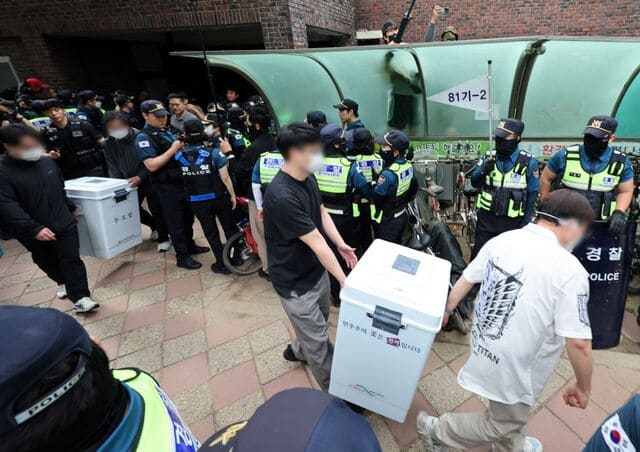
On June 5, police deployed 18 mobile police units and more than 1,000 officers to Jamsil 7-dong Polling Station No. 2 in Seoul’s Songpa District, dispersing protesters and removing two ballot boxes.
The polling station had effectively remained isolated after demonstrators demanding a re-election blocked its entrances following the ballot shortage controversy.
Police issued a dispersal order at approximately 7:50 a.m. before entering the polling station.
At around 8:45 a.m., two ballot boxes containing approximately 2,000 votes were transported to the Songpa District counting center located at the Handball Gymnasium inside Olympic Park.
The ballot boxes were removed 35 hours after voting had concluded, making the incident one of the most unusual cases in South Korean election history.
🔹Clashes Between Protesters and Police During Removal Operation
Physical confrontations occurred between protesters and police during the ballot box transfer operation.
Demonstrators strongly opposed the transportation of the ballot boxes and attempted to block police efforts.
Some participants lay down on roads or became involved in physical altercations with officers.
Police used force to move protesters away and maintain public order.
Several demonstrators later traveled to the counting center, where they continued demanding that vote counting be halted and that a new election be conducted.
Slogans such as “Re-election,” “Stop the Vote Count,” and “Voting Rights Violated” were repeatedly chanted at the scene.
🔹Six Injured; Rumor of Student Falling Into Coma Proven False
According to police and fire authorities, six people suffered minor injuries during the clashes.
The injured complained of headaches, dizziness, ankle sprains, shoulder pain, and abrasions and were transported to hospitals for treatment.
Fortunately, authorities confirmed that none of the injuries were life-threatening.
Meanwhile, claims circulated on social media platforms and certain YouTube channels alleging that a university student in his twenties had fallen into a coma after suffering a head injury during police operations.
Police stated that after reviewing video footage and obtaining testimony from officers at the scene, the allegation was found to be false.
“There was no citizen who fell into a coma, and the information circulating online is not true,” police said.
🔹Vote Counting Completed, but Tensions Continue at Counting Center
At approximately 3 p.m., the NEC completed the counting of the two ballot boxes from Jamsil 7-dong Polling Station No. 2 at the Olympic Park Handball Gymnasium counting center.
However, tensions around the venue continued even after the counting process ended.
Conservative-leaning YouTubers and citizens demanding a re-election gathered around the counting center, causing delays in the movement of NEC staff and vote-counting observers.
Some protesters attempted to verify the identities of individuals entering and leaving the venue or physically obstructed their movement.
The process of sealing counted ballots and transporting them to official storage facilities was also reportedly delayed.
🔹Size of Protest Grows From Hundreds to Approximately 2,000 Participants
The demonstrators who initially gathered outside Jamsil 7-dong Polling Station No. 2 later moved to the counting center and the NEC headquarters in Gwacheon.
According to unofficial police estimates, the number of protesters around the counting center reached approximately 650 at one point and later grew to around 2,000 by the evening.
Participants waved South Korean and American flags while chanting slogans such as “Hold a Re-Election” and “Stop Illegal Vote Counting.”
Signs carrying messages including “Voting Rights Violated” and “Condemn the Election Commission” were also widely displayed.
Police strengthened security by deploying mobile units and establishing double security lines at the entrances to the counting center.
🔹Political Figures Visit Protest Sites
Several political figures visited the scene as the controversy intensified.
People Power Party leader Jang Dong-hyeok visited the counting center along with lawmakers Joo Jin-woo and Park Jun-tae and demanded explanations from election authorities.
Although they were not allowed to enter the counting center itself, they called for a full investigation into the ballot shortage and broader election management failures.
Former Prime Minister Hwang Kyo-ahn, leader of the Liberty and Innovation Party, also appeared at the protest site.
Jeon Han-gil, a YouTuber and former Korean history instructor, likewise visited the counting center and argued that the election should be declared invalid.
While some political figures and civic groups continued demanding a re-election, the NEC maintained that no legal basis currently exists for such a measure.
🔹Seoul Metropolitan Council Proportional Representation Balance Reversed
The vote count from Jamsil 7-dong Polling Station No. 2 ultimately affected the allocation of proportional representation seats in the Seoul Metropolitan Council.
Before the delayed count, projections suggested that the Democratic Party would secure eight proportional seats while the People Power Party would win seven.
However, after the approximately 2,000 delayed votes were counted, the balance shifted, resulting in seven seats for the Democratic Party and eight for the People Power Party.
Because the ballots were incorporated into the official results two days after Election Day, the People Power Party ultimately edged ahead of the Democratic Party in total proportional representation votes.
Political observers noted that the delay in removing the ballot boxes had a significant impact on the timing and presentation of election results.
🔹Calls for Parliamentary Inquiry and Special Prosecutor Intensify
Political pressure has continued to increase in the wake of the controversy.
The People Power Party has formally demanded a parliamentary investigation and the appointment of an independent special prosecutor while intensifying criticism of the NEC.
Lawmaker Joo Jin-woo filed criminal complaints against NEC Chairman Noh Tae-ak and Secretary-General Heo Cheol-hoon on charges including dereliction of duty and abuse of authority.
Lawmaker Kim Jae-seop also argued that a special prosecutor is necessary to determine the precise causes of the incident and prevent the further spread of election-fraud conspiracy theories.
The Democratic Party has likewise acknowledged the need for an investigation into election management failures.
Prime Minister Kim Min-seok described the matter as “something that absolutely cannot be overlooked” and pledged to uncover the truth using every available means, including criminal investigations.
Democratic Party floor leader Han Byung-do also mentioned the possibility of pursuing a parliamentary inquiry.
🔹Growing Debate Over Possible Violations of Election Law
Legal experts have begun discussing whether the actions of some protesters could constitute violations of South Korea’s Public Official Election Act.
Some legal analysts argue that blocking access to polling stations and interfering with election officials could qualify as obstruction of election administration or disruption of polling station operations under election law.
In particular, preventing NEC employees from carrying out their duties and maintaining a prolonged blockade of a polling station could potentially result in penalties more severe than those associated with ordinary obstruction of public duties.
However, observers also note that the NEC’s acknowledged failure to adequately supply ballots was the direct catalyst for the confrontation and could be considered a mitigating factor in any future legal proceedings.
🔹Election Trust Controversy Expected to Continue
What began as a ballot shortage issue has expanded far beyond a temporary disruption at a polling station and has evolved into a broader debate over confidence in South Korea’s electoral system.
The NEC continues to emphasize that no evidence of election fraud has been discovered.
Nevertheless, some citizens and political groups are demanding additional reviews and verification of the entire election process.
With ballot shortages, voting extensions, delayed ballot box transfers, counting-center protests, and calls for a re-election all occurring in succession, political conflict surrounding the election is expected to continue for some time.
Many observers believe that the outcome of the NEC’s promised investigation, as well as whether the National Assembly proceeds with a parliamentary inquiry, will become key factors in determining how the controversy ultimately unfolds.
One-line summary : The nationwide ballot shortage crisis has led to the resignation of the NEC leadership, confrontations surrounding ballot box transfers and vote counting in Jamsil, and a widening political dispute over election integrity and accountability.
728x90
반응형
그리드형(광고전용)
'오늘의 일들 > Korea Today's News' 카테고리의 다른 글
| [26.06.07] Jensen Huang’s Korea Visit and Executive Meetings (0) | 2026.06.07 |
|---|---|
| [26.06.06] Won-Dollar Exchange Rate Tops 1,560 (0) | 2026.06.06 |
| [26.06.04] Homeplus to Close 37 Stores, Offer Voluntary Retirement (0) | 2026.06.04 |
| [26.06.03] Ballot Shortages, Voting Extensions Fuel Election Management Controversy (0) | 2026.06.03 |
| [26.06.02] Kim Se-ui’s Detention Review Request Rejected (0) | 2026.06.02 |
댓글 영역